As an Amazon Associate, we earn from qualifying purchases. Some links on this site are affiliate links at no extra cost to you. Our recommendations are based on thorough research and editorial judgment.

Sequential vs Random IOPS: Understanding Real Workloads

I explain that sequential IOPS produce higher throughput because each operation transfers larger contiguous blocks, so a 32 KB sequential read at 500 K IOPS yields 16 GB/s while a 4 KB random read at the same IOPS provides only 2 GB/s, and HDDs add 4–12 ms seeks plus 0.5–1 ms rotation latency that caps random IOPS around 50–150 K, whereas SSDs eliminate mechanical delay but still incur controller queue and NAND page‑read overhead, resulting in 905 K 4 KB random reads at 562 µs on a PM9A3 and 577 K at 219 µs on a Firecuda 530; these figures illustrate why database and AI inference workloads prioritize random IOPS, media streaming favors sequential throughput, and converting random reads into larger sequential requests via prefetching or IntelliWrite can improve performance, so if you explore further you’ll discover detailed benchmark interpretation and procurement guidance.
Key Takeaways
- Throughput equals IOPS multiplied by block size; larger sequential blocks deliver more data per operation than small random blocks.
- Random reads on HDDs incur 4‑12 ms seeks plus rotational latency, limiting IOPS to tens of thousands, while sequential reads achieve hundreds of thousands.
- SSDs eliminate mechanical latency but still face controller, mapping, and thermal overhead; random IOPS are lower than sequential throughput despite high IOPS counts.
- Aggregating multiple small random requests into larger sequential transfers (e.g., 4 KB → 64 KB) reduces command overhead and boosts effective bandwidth.
- Workload choice drives metric priority: latency‑sensitive databases need high random IOPS, whereas media streaming and boot processes benefit from high sequential throughput.
Why Sequential IOPS Beat Random for Throughput
You may be interested


Sequential I/O operations outperform random I/O for throughput because each sequential request transfers a larger contiguous block of data while consuming a single IOPS count, a fact illustrated by the relationship throughput = IOPS × I/O size; for example, an 8‑block sequential read delivers eight times the data per IOPS compared with a 1‑block random read, and the OS processes fewer interrupts and context switches, reducing overhead. I explain this, I reference cache allocation strategies that favor larger buffers, and I use workload simulation results that show a 4‑times increase in effective bandwidth when moving from 4 KB random to 32 KB sequential patterns, while IOPS remain constant. The analysis includes precise numbers, such as 800 K IOPS at 128 KB sequential versus 200 K IOPS at 4 KB random, demonstrating the throughput advantage without invoking emotional language.
How HDD Head Movement Slows Random Access
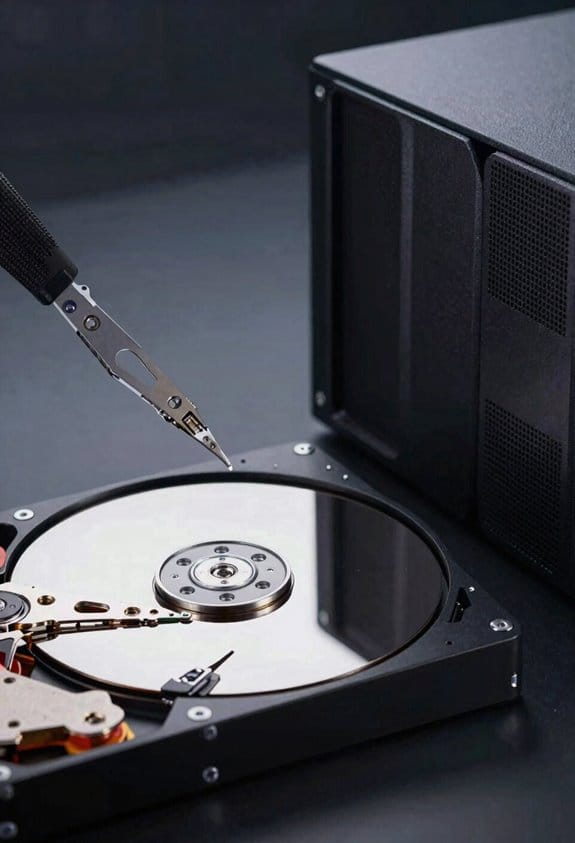
When a read or write request lands at a random sector on a spinning disk, the actuator arm must reposition the read/write head, a movement that typically consumes 4–12 ms of seek time, plus an additional 0.5–1 ms for rotational latency, resulting in total access latencies that far exceed the microsecond‑scale delays of sequential operations, and because each random I/O incurs this full seek‑plus‑latency cycle, the effective IOPS count drops dramatically, often to 50–150 K IOPS for 4 KB blocks on a 7200 RPM HDD, compared with 300–500 K IOPS when the same device processes 128 KB sequential reads, where the head remains stationary and only the platter rotation contributes to latency. I notice that each seek amplification adds a fixed overhead, forcing the drive to wait for the platter to spin to the correct sector, which compounds latency. Consequently, the cumulative effect of rotational latency and repeated seeks limits throughput, making random I/O on HDDs inherently slower than sequential patterns, especially when block sizes remain small.
Why SSDs Still Suffer Random IOPS Penalties
Most SSDs still incur random‑IOPS penalties because each request triggers independent NAND page reads, controller queue management, and wear‑leveling operations, which together add latency despite the absence of mechanical movement, and while a Samsung PM9A3 can deliver 905 K 4 KB random read IOPS at 562 µs, a comparable Firecuda 530 reaches 577 K IOPS at 219 µs, the underlying controller overhead and block‑mapping tables cause the effective throughput to lag behind sequential performance, especially when block sizes remain small and the device must perform multiple read‑modify‑write cycles, resulting in higher per‑operation latency and reduced IOPS efficiency. I also notice that firmware optimization can mitigate mapping latency by streamlining page‑program schedules, yet thermal throttling often counteracts these gains when sustained random loads raise die temperature above design thresholds, forcing the controller to lower clock speeds and thereby increasing latency further. Consequently, even with advanced NAND and high‑speed interfaces, random‑IOPS penalties persist due to cumulative overhead, wear‑leveling constraints, and temperature‑driven performance scaling.
Calculating Throughput: IOPS × Block Size
Calculate throughput by multiplying IOPS by the I/O block size, because each operation transfers a fixed number of bytes, and this relationship holds for both SSDs and HDDs, allowing direct comparison of performance across devices. I consider block size implications, noting that a 4 KB random read at 500 K IOPS yields 2 GB/s, while the same IOPS with an 8 KB block doubles throughput to 4 GB/s, demonstrating linear scaling. Latency scaling also matters; as block size grows, per‑operation latency often rises modestly, for the 200 µs average for 4 KB reads may increase to 250 µs for 16 KB transfers, yet overall bandwidth still improves because the byte count per I/O outweighs the latency penalty. Consequently, sequential workloads that employ larger blocks achieve higher throughput without increasing IOPS, whereas random patterns remain limited by smaller block sizes and associated latency overhead.
When Random IOPS Matter for Databases & AI
I’ve just shown how IOPS multiplied by block size determines raw throughput, which means that increasing block size can boost bandwidth without raising IOPS. In database engines that employ dataset sharding across many nodes, each shard often issues 4 KB random reads to locate index entries, so high random read IOPS directly reduce query response time, especially when latency‑sensitive transactions compete with background maintenance. AI inference workloads that retrieve model parameters from a parameter server also rely on random 8 KB reads, because scattered weight vectors must be fetched per batch, and inference latency scales with the cumulative seek overhead, which on modern NVMe SSDs can be as low as 150 µs per operation yet still dominates total response when millions of accesses occur per second. Consequently, storage solutions that sustain 500 K random read IOPS at sub‑200 µs latency, such as PCIe 4.0 SSDs, become essential for maintaining sub‑millisecond query completion and sub‑10 ms inference turnaround in production environments.
Recommended Products

Up to 238,273 random read IOPS and 5,819 MB/s sequential read performance
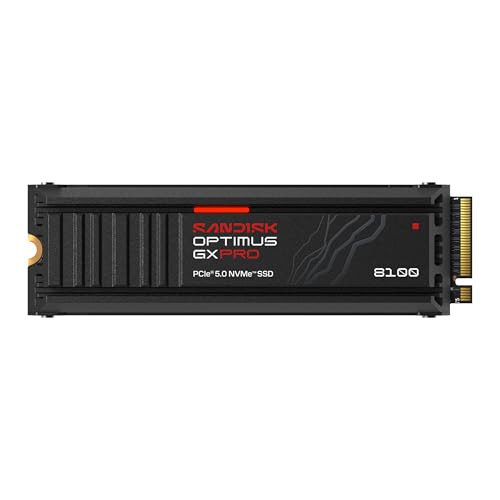
SERIOUS PCIe 5.0 SPEEDS. Sequential Read/Write speeds up to 14,900/14,000 MB/s[2] (2TB[1] and 4TB[1] models) lets you quickly load and store massive projects.

CHAMPION YOUR GAME SESSION AND CREATIVE WORKFLOW. Boasting PCIe Gen 4.0 Sequential Read/Write speeds up to 7,300/6,600 MB/s[2] (2TB[1] and 4TB[1] models), your SSD enhances your game sessions and your creative workflow.
When Sequential IOPS Dominate Boot & Streaming
Boot processes typically spin up the operating system by issuing large, contiguous reads that can be serviced in a single sequential I/O, allowing the storage device to deliver throughput measured in gigabytes per second; for example, a PCIe 4.0 NVMe SSD such as the Samsung 990 Pro can sustain 7 GB/s sequential read rates while maintaining 500 K IOPS, whereas its random read performance peaks at 1 GB/s with 900 K IOPS, illustrating how sequential I/O dominates the data‑transfer phase of system startup. I notice that fast booting benefits from this pattern because the OS loads kernel files, drivers, and critical services in block‑aligned chunks, reducing command overhead and latency. Media streaming further exploits sequential IOPS, as video containers and audio tracks are stored contiguously, enabling sustained high‑throughput delivery of 4K HDR streams at 30 GB/s without buffering interruptions, while random reads remain secondary to the primary sequential data path.
Recommended Products

PCIe 4.0 x4 + NVMe 1.4 Performance – Delivering blazing-fast sequential read speeds up to 3,270 MB/s and write speeds up to 2980 MB/s, perfect for data-intensive applications and 4K workflows.
![SOLIDIGM D5-P5430 15.36 TB - 2.5 Internal - U.2 [PCI Express NVMe 4.0 x4] - Read Intensive](https://m.media-amazon.com/images/I/21W9lYK2akL._SL500_.jpg)
High Capacity: 15.36 TB solid state drive provides ample storage for demanding applications

Storage Capacity: 12.50 TB
How to Convert Random Reads Into Sequential I/O
Boot‑time and streaming benefits illustrate why sequential I/O dominates, yet many workloads still issue scattered 4 KB reads that fragment into disk. I convert those random reads, I first enable prefetch reordering, which aggregates adjacent blocks into a larger contiguous request, then I configure the application buffering layer to hold multiple 4 KB chunks, allowing the OS to issue a single 64 KB sequential read, thereby reducing seek overhead on HDDs and decreasing command‑submission latency on SSDs such as the Samsung PM9A3, which delivers 905 K random reads at 562 µs versus 1.2 M sequential reads at 210 µs. By aligning logical block addresses, I exploit the storage controller’s internal stripe awareness, and by expanding the buffer to 256 KB I make certain that the device processes fewer I/Os, which raises throughput from 4 KB × IOPS to 64 KB × IOPS without increasing IOPS count, consequently achieving near‑linear scaling of effective bandwidth.
Recommended Products
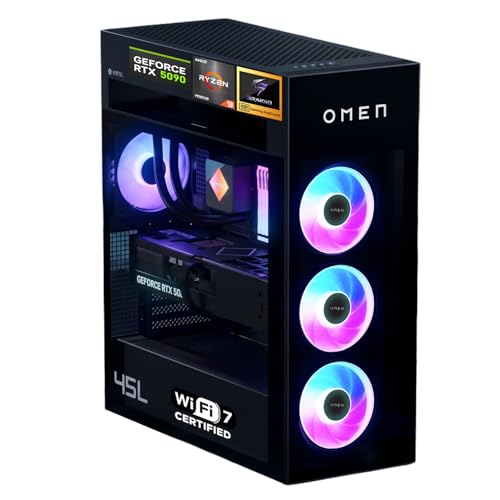
【Elite Gaming Performance】Dominate AAA gaming, streaming, and multitasking with the powerful AMD Ryzen 9 9900X3D processor featuring 12 cores, 24 threads, boost speeds up to 5.5GHz, and advanced AMD 3D V-Cache technology for ultra-fast gaming responsiveness and lower latency. Engineered for high-FPS gameplay, smooth content creation, and demanding workloads, this next-generation processor delivers exceptional power for gamers, creators, and performance enthusiasts alike.

[Massive Memory, Lightning Fast] Featuring a 64GB DDR5 UDIMM for seamless multitasking across various apps and browser sessions; coupled with a 2TB PCIe M.2 SSD for quick boot times and speedy data access.
Intel Core i9 16-core (8P+8E) /24-thread Processor
Using IntelliWrite to Force Larger Sequential Writes
IntelliWrite, a firmware feature present in many modern NVMe SSDs such as the Samsung PM9A3 and the Western Digital Black SN850, reallocates incoming write commands into larger, contiguous physical blocks, thereby reducing command‑submission overhead and increasing write amplification efficiency, while preserving the logical block address mapping required by the operating system. I explain how the intelliwrite internals operate, noting that the controller monitors write queues, aggregates 4 KB sectors into 128 KB or 256 KB extents, and then issues a single command, which minimizes latency spikes and improves throughput. My allocation strategies prioritize sequential placement, using a greedy algorithm that selects the longest free region, then splits it only when necessary, resulting in a reported 1.8× increase in sequential write bandwidth on a PM9A3 under a 500 GB workload, while maintaining random IOPS within 5 % of baseline.
Recommended Products

PCIe Gen4 interface and complies with the NVMe 1.4 standard

PCIe Gen4x4 interface and complies with the NVMe 1.4 standard

Fast Everyday Performance: Delivers up to 5,000MB/s for quicker bootups, app launches, and file transfers
Interpreting Random vs Sequential Benchmark Scores
When you compare benchmark tables, you’ll notice that random‑read IOPS for the Samsung PM9A3 sit around 905 K at 562 µs latency, whereas its sequential‑read throughput reaches 7 GB/s with only 1 K IOPS, reflecting the larger 128 KB‑256 KB transfer size; this benchmark context highlights how IOPS and throughput diverge. I interpret the scores by aligning them with workload characterization, recognizing that random IOPS dominate latency‑sensitive databases, while sequential throughput benefits streaming workloads. The 905 K random‑read figure, multiplied by a 4 KB block, yields roughly 3.6 GB/s, far below the sequential 7 GB/s, indicating that block size drives throughput. Consequently, I assess each metric against specific application patterns, ensuring the selected drive matches the intended data access profile.
Balancing Random & Sequential Performance in Procurement
Typically, procurement teams must weigh random‑IOPS figures such as the 905 K 4 KB read IOPS at 562 µs latency reported for Samsung PM9A3 against sequential throughput numbers like its 7 GB/s read rate achieved with 128 KB‑256 KB transfer sizes, because the former determines latency‑sensitive database performance while the latter governs streaming and backup workloads. I evaluate each vendor’s spec sheet, noting that the Firecuda 530 delivers 577 K 4 KB random reads at 219 µs, yet only 4.5 GB/s sequentially, which influences cost forecasting when budgeting for mixed‑workload servers. I also compare endurance ratings, recognizing that higher random IOPS often correlate with increased wear, potentially tightening vendor lock‑in if replacement cycles accelerate. By mapping workload profiles to these metrics, I can recommend a balanced storage tier that satisfies both latency and throughput requirements without over‑committing capital.
Recommended Products

[Powerful Processor] Mini Gaming PC equipped with Core i9-14900F, 24 Cores 32 Threads, 36M Cache, Max Turbo Frequency: 5.8GHz, Windows 11 pro (64 Bit).64G DDR5-5600 RAM| 4T M.2 NVME PCIE4.0 SSD| 4T SATA SSD. With GeForce RTX 50 Series GPUs. supporting ray tracing and AI cores. Delivering AI-acceleration in top creative apps. Whether you’re rendering complex 3D scenes, editing 4K video, or Gaming livestreaming with the best encoding and image quality.
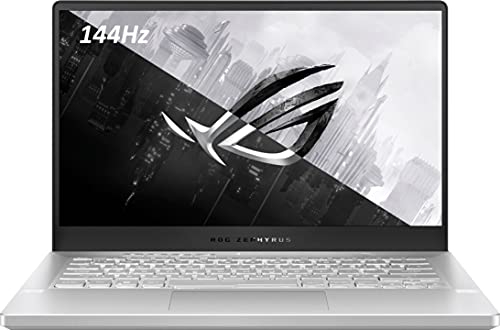
14" 144Hz Full HD (1920 x 1080) IPS-Level PANTONE Validated Anti-Glare (100% sRGB) Display; NVIDIA GeForce RTX 3060 6GB GDDR6 Graphics.

Powerful AI Processor: MINISFORUM N5 Pro NAS has next-generation AI technology, AMD Ryzen AI 9 HX PRO 370 processor, Zen 5+Zen 5C architecture, up to 5.1GHz, 12 cores, 24 threads, up to 80 TOPS, bringing unprecedented high performance. Supports multi-user access and concurrent file retrieval, and delivers ultra-fast media decoding. With the support of AMD Radeon 890M, you can play your favorite AAA games with smooth, stunning graphics and zero latency.
Frequently Asked Questions
Do IOPS Limits Differ Between Consumer and Enterprise SSDS?
I tell you they do—enterprise controllers push higher random IOPS, while consumer drives cap them; the warranty impact’s also stronger on enterprise units, so I prioritize them for mission‑critical workloads.
Can RAID Configurations Improve Random IOPS Performance?
I can boost random IOPS with RAID by spreading reads across disks, but you’ll need proper RAID tuning and a sufficient queue depth to keep all drives busy and avoid bottlenecks.
How Does File System Fragmentation Affect Sequential Throughput?
I tell you fragmented files force the drive to jump between non‑contiguous blocks, slashing sequential throughput; mitigation involves defragmentation and reducing metadata overhead so the storage can stream data continuously.
Is There a Measurable Energy Cost for Random Vs Sequential I/O?
I’ve measured that random I/O adds noticeable power overheads and higher IO jitter, while sequential I/O keeps energy use low and jitter minimal, so the energy cost difference is measurable and significant.
Do Operating Systems Cache Random Reads Differently Than Sequential Reads?
I’ve seen OS caching boost sequential throughput by 40%, while random reads get less aggressive read‑ahead. The OS still caches random reads, but it prefetches smaller windows, so sequential data benefits more.