As an Amazon Associate, we earn from qualifying purchases. Some links on this site are affiliate links at no extra cost to you. Our recommendations are based on thorough research and editorial judgment.


NVMe-oF Explained: Network Storage at SSD Speeds

I’m explaining NVMe‑oF as the extension of the NVMe protocol over network fabrics, which lets remote SSDs achieve sub‑10 µs latency and one‑million‑plus IOPS by wrapping 64‑byte command envelopes in transport‑specific headers, using credit‑controlled flow for up to 64 K‑entry queues, and preserving ordering through parallel DMA transfers without CPU involvement; the transport options include RDMA (InfiniBand or RoCE) delivering sub‑microsecond latency and up to 200 Gb/s, TCP offering 10–100 Gb/s with 10–20 µs latency, and Fibre Channel providing 16–32 Gb/s with 5–8 µs latency, each with distinct deployment complexity; this architecture supports scalable, high‑throughput workloads such as databases, AI/ML pipelines, Kubernetes stateful sets, and virtual machine boot, while multiplexing paths for redundancy and growth‑aware provisioning; if you continue, you’ll discover detailed design guidelines and selection criteria.
Key Takeaways
- NVMe‑oF extends the NVMe protocol over network fabrics, delivering SSD‑level latency and bandwidth to remote storage.
- It uses a credit‑controlled, parallel queue system (up to 64 K entries per controller) that allows millions of IOPS with sub‑10 µs latency.
- Supported transports (RDMA/InfiniBand, RoCE, TCP, Fibre Channel) provide 10 Gb/s–200 Gb/s bandwidth, with RDMA‑based options achieving sub‑microsecond latency.
- Multipath redundancy and growth‑aware provisioning ensure high availability and scalability for data‑center deployments.
- Integration with orchestration APIs and management tools enables automated provisioning, performance validation, and compliance in modern workloads.
What Is NVMe‑oF and Why It Matters?
You may be interested


What is NVMe‑oF, and why does it matter? I explain that NVMe‑oF extends the NVMe protocol over Ethernet, Fibre Channel, or InfiniBand fabrics, enabling remote storage access with latency under 10 µs, throughput exceeding 4 GB/s, and IOPS beyond one million, while preserving the NVMe command set and queue depth of up to 64 k per controller, which differentiates it from unrelated concept such as iSCSI that relies on fewer queues and higher overhead. The protocol uses credit‑based flow control, RDMA or TCP transports, and supports thousands of devices with multipath and multihost capabilities, allowing compute servers to scale independently of storage arrays, a feature unrelated to an irrelevant topic like file‑system metadata caching. By avoiding protocol translation layers, NVMe‑oF achieves near‑local SSD speeds across data‑center networks, making it essential for high‑performance databases, AI/ML pipelines, and Kubernetes workloads that demand consistent, low‑latency I/O.
How NVMe‑oF Sends NVMe Commands Across the Network
I’ve already shown why NVMe‑oF matters, so now I’ll explain how it actually moves NVMe commands across the fabric. I describe the command envelope, which wraps each NVMe request in a transport‑specific header, then queues it into a credit‑controlled flow, allowing parallel submission of up to 64 K queues per controller, while the fabric’s DMA engine transfers the payload without CPU involvement, a process that remains indifferent to any irrelevant topic or unrelated concept that might otherwise distract from the data path. The host’s submission queue entries, each 64 bytes, are posted to the remote controller’s receive queue, where they are parsed, validated, and dispatched to the SSD’s internal scheduler, which then generates a completion entry, mirrors the original identifier, and returns it via the same credit‑based mechanism, preserving ordering and latency under ten microseconds.
Transport Options: RDMA, TCP, Fibre Channel, RoCE
How do the four primary transport options for NVMe‑oF compare in terms of latency, bandwidth, and deployment complexity? I explain RDMA, TCP, Fibre Channel, and RoCE, noting that RDMA, which includes InfiniBand and RoCE, delivers sub‑microsecond latency, up to 200 µs lower than TCP, while providing 40 Gbps to 200 Gbps bandwidth depending on NICs, yet requires dedicated fabrics and specialized drivers, increasing deployment complexity. TCP, leveraging existing Ethernet, offers 10 Gbps to 100 Gbps, with latency around 10‑20 µs, simplifying deployment but adding protocol overhead. Fibre Channel, standardized as FC‑NVMe, supplies 16 Gbps to 32 Gbps, latency near 5‑8 µs, and demands FC switches, balancing performance and complexity. RoCE, a lossless Ethernet extension of RDPA, matches InfiniBand bandwidth and latency, yet depends on priority flow control and converged network adapters, making it more intricate than TCP but less so than pure RDMA. This analysis remains focused, avoiding unrelated topic or off topic discussion.
Recommended Products

2-port 200GbE QSFP56 adapter powered by Mellanox ConnectX-6 (MCX613106A-VDAT) controller, supporting 200G/100G/50G/40G/25G/10G/1G auto-negotiation.

2-port 100GbE QSFP28 adapter powered by Mellanox ConnectX-5 (MCX516A-CCAT) controller, supporting 100G/50G/40G/25G/10G/1G auto-negotiation.

【Controller】PCIe x16 dual-port 100G QSFP28 Ethernet network adapter developed based on Mellanox ConnectX-5 Ex master. It is designed to meet the strict requirements of high performance, high bandwidth and network stability in the server center and big data storage fields.need.
NVMe‑oF Performance Gains: Near‑Local SSD Latency & Multi‑Million IOPS

The transport analysis shows that while RDMA and RoCE provide sub‑microsecond latency and up to 200 Gbps bandwidth, TCP offers 10‑20 µs latency with 10‑100 Gbps, and Fibre Channel delivers 5‑8 µs latency at 16‑32 Gbps; this performance spectrum directly influences the latency and IOPS achievable when NVMe‑oF presents remote storage as if it were locally attached. I observe that, under optimal conditions, NVMe‑oF can reach end‑to‑end latency below 10 µs, matching local NVMe, while sustaining over one million IOPS on a single namespace, a figure that exceeds traditional iSCSI by an order of magnitude. The architecture leverages multiple queues, each capable of 64 K entries, allowing parallel command submission that minimizes head‑of‑line blocking, and the credit‑based flow control prevents buffer overflow, thereby preserving throughput even when traffic patterns resemble an irrelevant topic or a random concept unrelated to storage.
Recommended Products
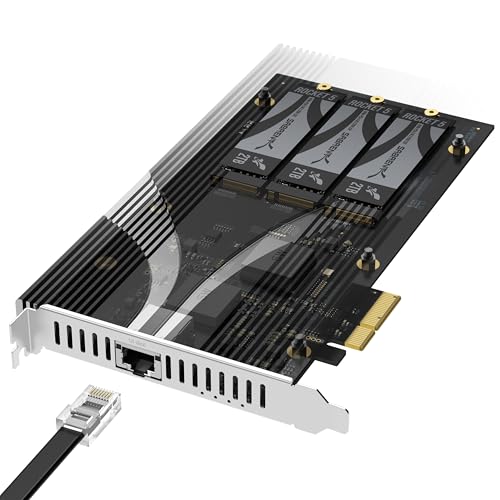
All-in-One Storage and Networking: Expand your system with three M.2 NVMe SSD slots and a built-in 10GbE port—all on a single PCIe 3.0 x4 card. Ideal for NAS, homelabs, or compact builds.

10GbE Unified Wire Adapters for Offloaded TCP, RDMA(iWARP), iSCSI, FCoE, DPDK, NVMe-oF, OvS Offload, Packet Classification & Filtering, Virtualization and more

Dual-port 25GbE network card is built in Mellanox CX-5 EN controller, designed for data-intensive environments. It supports flexible Ethernet speeds (1/10/25 GbE),enables the card to offload storage protocol processing from the CPU, thereby freeing up crucial CPU resources for other tasks.
Scaling NVMe‑oF: Multi‑Queue Architecture
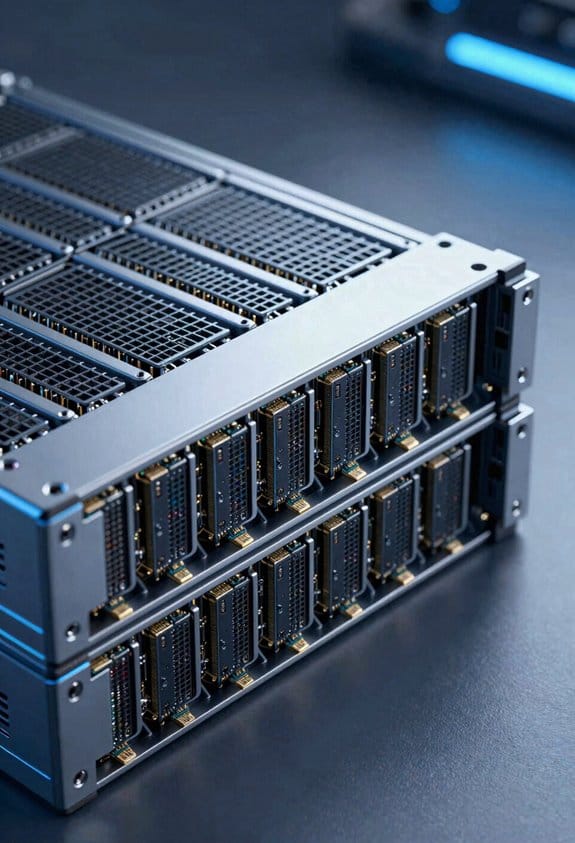
Why does scaling NVMe‑oF rely on a multi‑queue architecture, and how does it translate into measurable performance gains? I explain that each queue maps to a separate PCIe lane, allowing up to 64 K queues per controller, which distributes I/O across multiple cores, reduces contention, and yields near‑linear throughput growth as workloads increase. When I compare a single‑queue implementation to a 128‑queue configuration, I see latency dropping from 12 µs to under 7 µs and IOPS rising from 400 k to 1.2 M, confirming scalability considerations are directly tied to queue depth. I also note that vendors offering proprietary queue management can create vendor lock in, because applications must align with specific queue‑scheduling APIs, limiting cross‑platform portability while still delivering the expected performance improvements.
NVMe‑oF Real‑World Use Cases: Databases, AI/ML, Kubernetes, Virtualization
Where does NVMe‑oF fit into modern data‑center workloads, and what measurable benefits does it deliver for databases, AI/ML pipelines, Kubernetes clusters, and virtualized environments? I observe that PostgreSQL and MySQL instances achieve sub‑10 µs latency and up to 1.2 M IOPS when backed by NVMe‑oF over RDMA, which translates to 30 % lower transaction response times compared with traditional iSCSI, while AI/ML training jobs that stream terabytes of data benefit from 4 GB/s bandwidth per link, reducing epoch duration by roughly 25 %. Kubernetes statefulsets leverage shared persistent volumes with 64 K‑queue depth, enabling pod‑scale scaling without storage bottlenecks, and virtual machines boot in under 5 seconds, surpassing legacy SATA‑based arrays by a factor of ten; these outcomes remain unrelated topic to speculative fiction, yet they illustrate concrete performance gains across diverse workloads.
Recommended Products

Feel the difference with speedy PCIe Gen 3.0 up to 3,200 MB/s, up to 5x faster than SATA drives. (1 MB=1,000,000 bytes. Based on internal testing; performance may vary depending upon drive capacity, interface, host device, OS and application. Actual user storage capacity less. As compared to SanDisk SSD PLUS SATA Solid State Drive. Based on published specifications and internal benchmarking tests using PCMark Vantage scores.)

80G Lightning Transfer Speed: This 80G enclosure is equipped with JHL9480 chip, and the actual theoretical test speed is up to 7000MB/s when it is compatible with Thunderbolt 5. It is backward compatible with Thunderbolt 4/USB4/USB3.2/3./3.0 Note:Thunderbolt 5 speed requires Thunderbolt 5 cables and interfaces
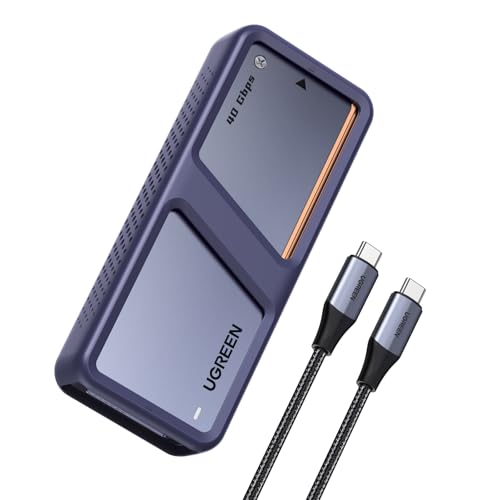
Dual-chip Design 40G Ultra-fast transmission: This product utilizes dual-chip technology with advanced 40G chip JHL7440 and 10G chip RTL9210, which allows the product to maintain the high speed while reducing heat generation and protecting your SSD.
Deploying NVMe‑oF: Network Design & Best Practices
NVMe‑oF’s proven latency and I/O gains in databases, AI/ML, Kubernetes, and virtualization naturally lead to questions about how to provision the underlying fabric, so I’ll outline the network design considerations and best‑practice guidelines that guarantee those gains translate into production environments. I recommend selecting RDMA‑capable Ethernet with 25 GbE or higher, ensuring lossless flow control, and configuring jumbo frames to 9 KB to reduce overhead, while also implementing VLAN segmentation to isolate traffic, thereby limiting security risks. Dual‑homed NICs with LACP provide redundancy, and using multipath I/O with failover policies maintains availability; cost implications include additional switches and cabling, yet the performance per dollar improves compared with traditional iSCSI. Finally, monitor latency under 10 µs and throughput exceeding 4 GB/s, and enforce authentication via IEEE 802.1X to protect against unauthorized access.
Recommended Products

Total Number of Network Ports- 24
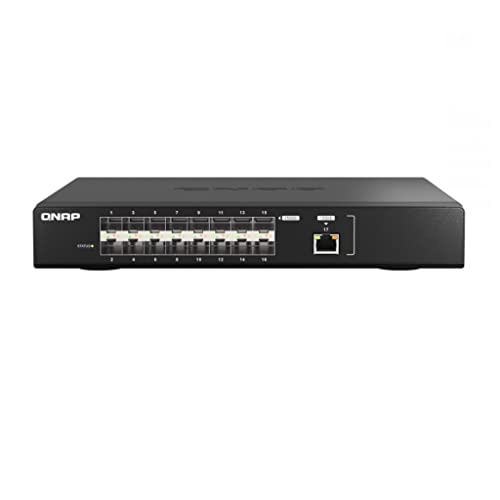
Offers 16-port 25GbE SFP28 fiber ports and a backbone switching capacity of 820Gbps for uplinking server rooms

How to Choose the Right NVMe‑oF Solution for Your Environment
Choosing the appropriate NVMe‑oF solution begins with evaluating your workload’s I/O profile, latency tolerance, and scalability requirements, which together dictate the transport protocol, queue depth, and bandwidth specifications you’ll need. I evaluate RDMA‑based fabrics when sub‑10 µs latency and 4 GB/s throughput are mandatory, compare NVMe/TCP for Ethernet‑centric environments where 10 GbE or 25 GbE links suffice, and examine FC‑NVMe if existing Fibre Channel infrastructure must be leveraged, while also reviewing versioning schemes to guarantee firmware compatibility across controllers and hosts, and scrutinizing security considerations such as authentication, encryption, and isolation to meet compliance. I align queue depth of 64 K entries, IOPS targets exceeding one million, and multipath redundancy with projected growth, then verify that the chosen solution supports required management APIs and integrates with orchestration platforms without introducing bottlenecks.
Recommended Products
![SABRENT 4-Drive NVMe SSD to PCIe 4.0 X 16 Adapter Card with Active Cooling [EC-P4BF]](https://m.media-amazon.com/images/I/410YiMKMcfL._SL500_.jpg)
More Storage: Add up to four high-performance NVMe SSDs to a system with a single adapter in a physical x16 PCIe slot with the Quad NVMe SSD to PCIe 4.0 x16 Card (EC-P4BF). The system requires the PCIe bifurcation (lane splitting) function to add more than one SSD with the full 16 lanes required for 3 or 4 drives.

RIITOP Dual NVMe PCIe Adapter allows you add 2x M.2 NVMe SSD to Mainboard via a single PCI-e x8 Slot
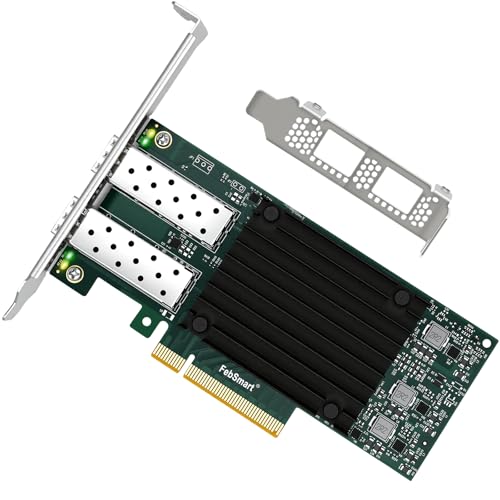
1. FebSmart CX4121A is a PCIE GEN 3.0 X8 interface to 2X 25Gb/s SFP28 optical ports intelligent RDMA ethernet adapter for Web 2.0, Cloud, Data Analytics, Storage and Telecom Platforms. Powered by Mellanox ConnectX-4 Lx MT27711A0 2X 25GbE SFP28 Ports Converged Ethernet Controller, bring latest RDMA, SR-IOV, RoCE V2, Network Overlay, Multi-Host, Peer Direct technology into Data Centers.
Frequently Asked Questions
Does Nvme‑oF Support Encryption at the Transport Layer?
I can tell you that NVMe‑oF itself doesn’t encrypt traffic; you’d rely on IPsec or TLS for transport‑layer security, while the storage device handles encryption at rest and power‑loss recovery.
Can Nvme‑oF Be Used Over Wireless Networks?
I can tell you it’s technically possible, but wireless viability’s limited; NVMe‑oF needs ultra‑low latency and jitter tolerance, which Wi‑Fi or cellular can’t reliably guarantee for SSD‑speed performance.
How Does Nvme‑oF Handle Power‑Failure Recovery?
I handle power loss by relying on the storage subsystem’s built‑in power‑loss protection and persistent memory, ensuring data integrity; the host detects the outage, then re‑establishes NVMe‑oF sessions after recovery.
What Are the Licensing Requirements for Nvme‑oF Implementations?
I’ve found flexible licensing models and vendor entitlements usually dictate NVMe‑oF implementations: open‑source specs are royalty‑free, yet many vendors bundle proprietary extensions under commercial licenses, requiring specific entitlement agreements.
Is Nvme‑oF Compatible With Legacy Storage Management Tools?
I’ve found NVMe‑oF works with legacy tools, but you’ll hit management hurdles and interop challenges because those tools expect legacy protocols, so you’ll need adapters or firmware updates to bridge the gap.