As an Amazon Associate, we earn from qualifying purchases. Some links on this site are affiliate links at no extra cost to you. Our recommendations are based on thorough research and editorial judgment.

HDD Lifespan: MTBF Ratings vs Real-World Failure Rates

I explain that MTBF, measured in power‑on hours—about 600 k h for consumer HDDs and 1–1.5 M h for enterprise models—represents a statistical average derived from accelerated laboratory testing of large drive populations, assumes a constant failure rate within a five‑year window, and consequently does not predict any individual drive’s lifespan, while real‑world annual failure rates, such as Backblaze’s 0.84 %–1.32 % for 8‑12 TB drives, reveal a yearly failure probability that rises with drive age, temperature, vibration, and workload, making AFR a more practical metric for planning replacements; if you continue, you’ll see how age‑segmented AFR refines reliability forecasts.
Key Takeaways
- MTBF (e.g., 600 k h) is a statistical average derived from lab‑tested drive populations, not a guarantee of any single drive’s lifespan.
- It assumes a constant failure rate over a five‑year window, ignoring the early‑failure “bathtub” phase and later wear‑out acceleration.
- Real‑world annual failure rates (AFR) for consumer HDDs typically range 0.8 %–2 % per year, far higher than the implied 0.02 % derived from 600 k h MTBF.
- AFR increases with drive age—often 0.8 % in the first three years, rising to ~1.5 % after six years—while MTBF remains static.
- Use AFR trends, not MTBF alone, to schedule replacements when the yearly failure probability exceeds your acceptable risk, usually around the five‑year mark.
What MTBF Actually Measures
You may be interested
MTBF, or Mean Time Between Failures, quantifies the average interval—expressed in power‑on hours—between successive failures across a statistically significant population of drives, typically derived from accelerated laboratory testing over weeks or months and then extrapolated to represent an entire product family, with consumer‑grade HDDs often rated around 600 000 hours and enterprise models near 1 000 000 to 1 500 000 hours, yet this figure applies only within the first five years of service and reflects a population‑level statistic rather than a prediction of any individual drive’s lifespan. I explain that MTBF limitations stem from assuming constant failure rates, ignoring wear‑out phases and environmental stressors, while AFR relevance provides a yearly failure proportion that captures real‑world usage patterns, allowing engineers to compare field data across models, assess warranty risk, and plan replacement cycles with quantifiable confidence.
Why MTBF Misleads Individual Users?

How, then, does a figure that aggregates failure intervals across thousands of units become misleading for a single owner, when the advertised 600 000‑hour MTBF for a consumer HDD translates to roughly 68 years of continuous operation, yet the underlying statistical model assumes a constant hazard rate, ignores the bathtub curve’s early‑failure and wear‑out phases, and applies only within a five‑year service window that most individual users never exceed; consequently, the MTBF value, derived from accelerated laboratory testing of limited sample sizes, fails to reflect real‑world variables such as temperature fluctuations, vibration, power‑cycle frequency, and workload intensity, which together can increase the actual annual failure rate (AFR) to 1‑2 % for modern drives, meaning that a drive may fail after three years despite a nominal MTBF suggesting decades of reliability. I see this as a classic case of vendor marketing turning population averages into an overstated reliability figure that misleads individual users, because the metric ignores specific usage patterns and environmental stressors that dominate real‑world failure probabilities.
Recommended Products

[4K Ultra HD and Color Night Vision] This incredible 4K CMOS image sensor allows the camera to capture more light, resulting in improved color, contrast, and low-light performance. With 4K resolution, you can record everything in stunning detail with high pixel count and digitally zoom in on objects in the distance without losing any quality. Experience the ultimate clarity and enhanced visibility with our advanced technology.

32 CHANNEL VANDAL-PROOF SECURITY CAMERA SYSTEM: It has 24pcs 4K/8MP 2.8mm fixed lens (Not PTZ) camera produced with IK10 vandal-proof and built-in microphone. The 4K 32CH NVR of this system comes with a 8TB hard drive. it has 2 SATA port to expand to total 16TB storage space.

32 CHANNEL VANDAL-PROOF SECURITY CAMERA SYSTEM: It has 24pcs 4K/8MP 2.8mm fixed lens (Not PTZ) camera produced with IK10 vandal-proof and built-in microphone. The 4K 32CH NVR of this system comes with a 8TB hard drive. it has 2 SATA port to expand to total 16TB storage space.
What Real‑World Annual Failure Rates Reveal (MTBF vs. AFR)

Where does the gap between advertised MTBF numbers and measured AFR values become most evident, especially when a 600 000‑hour MTBF suggests decades of operation yet field data from Backblaze 2026 show a 0.84 % annual failure rate for the Seagate ST8000NM000A and a 1.32 % rate for the ST14000NM000J, indicating that real‑world drives typically fail at a frequency of one to two percent per year? I observe that MTBF misinterpretation stems from treating the statistic as a deterministic lifespan, whereas AFR limitations arise because the percentage reflects observed failures across a population per year, not a single unit’s expectancy. The Backblaze data, combined with Carnegie Mellon findings of 2‑13 % yearly replacements, demonstrate that drives rated for millions of hours actually experience failures roughly every 50‑100 months. Consequently, reliance on MTBF alone obscures the practical risk profile, while AFR provides a more actionable metric for maintenance planning and warranty budgeting.
Recommended Products

[CPU] AMD Ryzen Threadripper PRO 9995WX (96 Cores, 192 Threads, 2.5 GHz Base Clock Speed up to 5.4 GHz Max Boost Clock Speed) delivers unmatched reliable full spectrum performance with enterprise class security features, manageability, and unrivaled expandability. | [STORAGE] 4TB T710 PCIe NVMe Gen5 M.2 SSD - Experience Hyper-Fast Bootup and Data Transfer thats up to 30x Faster Performance than a Traditional Hard Drive. Store all of your files on the included 12TB 7200rpm 3.5" Hard Disk Drive.

(1) 1GB = 1 billion bytes and 1TB = 1 trillion bytes. Actual user capacity may be less depending on operating environment.

(1) 1GB = 1 billion bytes and 1TB = 1 trillion bytes. Actual user capacity may be less depending on operating environment.
How Drive Age Affects MTBF and AFR

Why does drive age matter when interpreting MTBF and AFR, given that the statistical assumptions underlying MTBF apply only within a five‑year service window while AFR reflects observed yearly failures across a population that increases markedly after the first three to five years of operation? I note that drive aging shifts the failure distribution, causing the MTBF‑derived constant hazard assumption to become invalid, whereas AFR interpretation must adjust for the steep rise in failures after year 5, often reaching 2‑3 % per annum for 8‑12 TB models. In practice, manufacturers still quote a 600 k‑hour MTBF, yet real‑world data show a 0.8 % AFR for drives under three years, climbing to 1.5 % after six years, implying that the population‑level risk grows faster than the linear extrapolation suggested by MTBF. Consequently, analysts should treat MTBF as a five‑year baseline and rely on age‑segmented AFR for accurate reliability forecasts.
Recommended Products

AMD Ryzen 7 9850X3D 4.7GHz (5.6GHz Turbo Boost) CPU Processor | 2TB Gen4 NVMe M.2 SSD – Up to 30x Faster Than Traditional HDD | 360mm AIO Liquid CPU Cooler with ARGB Fans, say goodbye to outdated and inefficient air coolers.
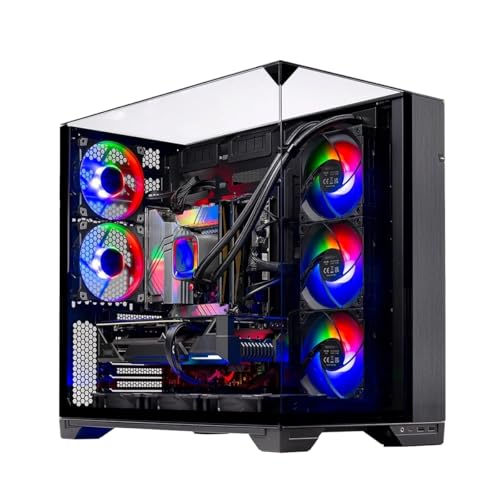
AMD Ryzen 7 7800X3D 4.2GHz (5.0GHz Turbo Boost) CPU Processor | 1TB Gen4 NVMe M.2 SSD – Up to 30x Faster Than Traditional HDD | 360mm AIO Liquid CPU Cooler with ARGB Fans, say goodbye to outdated and inefficient air coolers.

Designed for professional desktop workstations and high performance PC
When to Replace Drives and How to Use AFR + MTBF
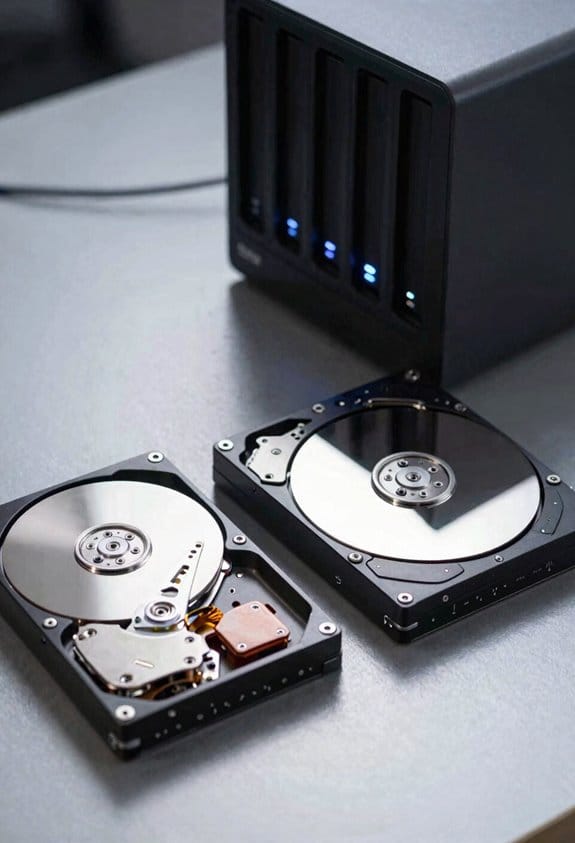
When planning drive replacement, I consider both the manufacturer‑specified MTBF, typically 600 k hours for consumer HDDs and 1–1.5 M hours for enterprise models, and the observed AFR, which ranges from 0.8 % in the first three years to 1.5 % after six years for 8‑12 TB units, because MTBF assumes a constant hazard within a five‑year window while AFR captures the increasing failure probability that emerges after the initial three‑to‑five‑year period, and by aligning the replacement schedule with the point where AFR exceeds the acceptable risk threshold—often around the 5‑year mark—I can mitigate unexpected downtime without over‑engineering the storage infrastructure. I treat MTBF misconceptions as statistical artifacts, applying AFR interpretation to prioritize replacement before the failure curve steepens, thereby balancing risk and cost.
Recommended Products

For demanding 24/7 environments, rated for 2.5 million hours MTTF and up to 550 TB per year workloads

Built-in [ 14TB ] Capacity USB 3.0 External Hard Drive (estimate 12TB Capacity available after formatted)

10TB Capacity USB 3.0 External Hard Drive (Build-in 7200RPM Enterprise HDD, Designed for 24/7)
Frequently Asked Questions
Do MTBF Ratings Differ Between SSDS and HDDS?
I’d say SSD durability differences are generally higher because they lack moving parts, while HDD failure mechanisms—mechanical wear and motor issues—cause lower MTBF ratings, so they differ noticeably.
Can I Calculate My Own MTBF From Drive Logs?
I can calculate hardware health metrics from my drive logs, but predicting pof rates reliably needs large sample sizes and proper statistical modeling, so my single‑drive MTBF estimate will be rough at best.
How Does RAID Configuration Affect AFR?
I’ll show you how RAID impact reshapes AFR interpretation: it spreads risk, lowers individual drive AFR, but adds complexity, so you must factor redundancy, rebuild stress, and total‑capacity exposure into your calculations.
Do Warranty Periods Reflect Real Failure Probabilities?
I think warranty periods only loosely mirror real failure probabilities; they’re more a marketing baseline than a statistical guarantee, so I’d treat them as a rough, two‑word discussion subtopic relevance, not a precise predictor.
Is There a Correlation Between Drive Capacity and Failure Rate?
I’ve seen larger‑capacity drives show slightly higher failure rates, especially when HD wear spikes and SMART anomalies appear more often; the extra platters and denser data can stress components, increasing risk.