As an Amazon Associate, we earn from qualifying purchases. Some links on this site are affiliate links at no extra cost to you. Our recommendations are based on thorough research and editorial judgment.


End-to-End Data Protection Across Storage Tiers

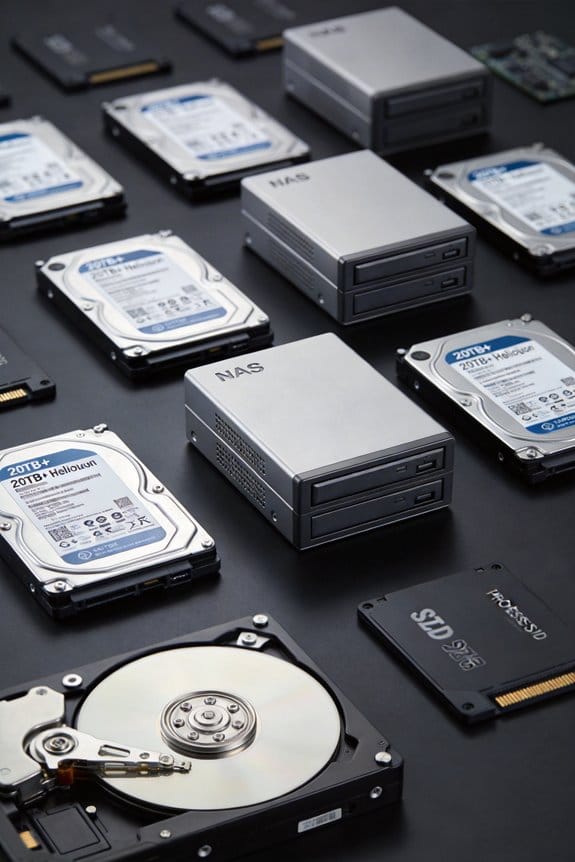
I classify data by retention schedules, sovereignty rules, IOPS/latency measurements, and business impact, assigning mission‑critical logs to Tier‑0 SSD (≥10 k IOPS, <1 ms), high‑frequency analytics to Tier‑1 NVMe (≈5 k IOPS, ≈2 ms), moderate backups to Tier‑2 hybrid (≈2 k IOPS, ≈5 ms), and cold archives to cloud tiers (≤0.5 k IOPS, >50 ms). Encryption varies: Tier‑0 uses AES‑256‑GCM, Tier‑1 AES‑128‑XTS, Tier‑2 AES‑256‑CBC, all governed by HSM‑rotated keys every 90 days; replication is synchronous for Tier‑0, asynchronous for Tier‑1/2, maintaining <50 ms latency for critical workloads. Policy‑driven automation evaluates access frequency, cost thresholds, and compliance to trigger tier moves, while dashboards monitor spend, budget variance, and residency, and governance logs record every transition, so continued exploration will reveal deeper implementation details.
Key Takeaways
- Align retention schedules with tier placement, ensuring minimum storage duration before data can be moved to lower‑cost tiers.
- Enforce sovereignty and compliance by tagging data with residency requirements and validating tier locations against regional regulations.
- Apply tier‑specific encryption (AES‑256‑GCM, AES‑128‑XTS, AES‑256‑CBC) and centralized key management with 90‑day rotation across all storage media.
- Use automated policy evaluation of IOPS, latency, and cost to trigger synchronous replication for Tier‑0, asynchronous replication for Tier‑1/2, and archival placement when retrieval latency >50 ms.
- Continuously monitor spend, budget variance, and audit logs, integrating tier history into a unified data catalog for governance and compliance reporting.
How to Classify Data for Tier‑Based Storage Protection
You may be interested



How do we determine which datasets belong in each storage tier, given that classification hinges on access frequency, business criticality, and regulatory requirements, while also considering cost constraints, retention periods, and performance metrics such as IOPS and latency? I start by mapping each data set to a retention schedule, noting that data retention policies often dictate minimum storage duration, then evaluate sovereignty constraints, ensuring that data residing in a particular jurisdiction complies with local laws, and I assess access patterns, measuring average IOPS per second and latency in milliseconds to decide whether a tier‑0 SSD (10 k IOPS, <1 ms latency) or tier‑2 hybrid (2 k IOPS, ~5 ms latency) is appropriate, and I cross‑reference business impact scores, assigning mission‑critical items to tier‑1 high‑performance SSD (5 k IOPS, <2 ms latency) while allocating low‑priority archives to cold cloud storage (0.5 k IOPS, >50 ms latency) to balance cost and compliance.
Recommended Products
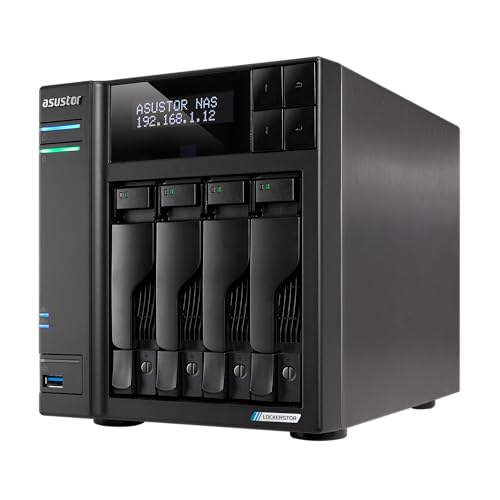
[Intel Quad-Core Efficient Processing Power] Powered by Intel Celeron N5105 quad-core CPU for smooth multitasking, file sharing, media streaming, and 24/7 NAS workloads.

2.5 inch Form Factor, 480 Capacity, SATA Revision 3.0 (6/Gb/s)
Choosing the Right Storage Tier for Each Data Class

Select the appropriate tier by mapping each data class to its performance, cost, and compliance attributes, then aligning those attributes with the defined storage technologies, such as Tier 0 SSDs offering 10 k IOPS and < 1 ms latency for mission‑critical transactional logs, Tier 1 NVMe drives delivering 5 k IOPS and ≈ 2 ms latency for high‑frequency analytics, Tier 2 hybrid arrays providing 2 k IOPS and ≈ 5 ms latency for moderately accessed backups, and cloud cold tiers like AWS S3 Infrequent Access or Azure Archive presenting 0.5 k IOPS and > 50 ms latency for long‑term retention, while simultaneously evaluating storage cost per gigabyte, regulatory jurisdiction, and required retention periods to ensure that financial and compliance constraints are met without sacrificing required access speeds. I use data labeling to tag each class, enforce access governance policies that restrict reads and writes to authorized roles, and verify that Tier 0 and Tier 1 meet latency SLAs, Tier 2 satisfies backup recovery windows, and cold tiers comply with archival regulations, thereby achieving balanced protection across the storage hierarchy.
Automating Tier Transitions With Policy‑Driven Workflows
What drives efficient data lifecycle management is a set of automated, policy‑driven workflows that evaluate access frequency, cost thresholds, and compliance constraints, then trigger tier transitions without manual intervention, ensuring that files exceeding 10 k IOPS and 1 ms latency requirements remain on Tier 0 SSDs, while data whose read/write rates fall below 2 k IOPS and whose cost per gigabyte surpasses $0.02 are migrated to Tier 2 hybrid arrays, and archival objects with retrieval latency tolerances over 50 ms and storage cost below $0.005 are placed in cloud cold tiers such as AWS S3 Infrequent Access or Azure Archive, all while maintaining metadata integrity, encryption key propagation, and replication policies that preserve availability across geographically dispersed nodes. I embed data governance rules directly into the workflow engine, linking each policy to a unified data catalog that records tier history, access metrics, and cost attribution, allowing continuous compliance verification, automated re‑classification, and precise reporting without manual oversight.
How to Encrypt, Replicate, and Build DR Across Storage Tiers

When encrypting data across storage tiers, I apply AES‑256‑GCM at rest on Tier 0 SSDs, AES‑128‑XTS on Tier 1 SSDs, and AES‑256‑CBC on Tier 2 hybrid arrays, while ensuring key management integrates with a centralized HSM that supports rotation every 90 days, compliance with NIST SP 800‑57, and automated distribution to cloud providers such as AWS KMS and Azure Key Vault, which both enforce policy‑based access controls and audit logging for every encryption operation. I then configure cross‑region replication using synchronous snapshots for Tier 0 and asynchronous replication for Tier 1 and Tier 2, leveraging built‑in bandwidth throttling to maintain latency below 50 ms for critical workloads and ensuring that each replica retains identical encryption key management metadata, thereby preserving data integrity and regulatory alignment across geographic boundaries.
Monitoring Cost, Compliance & Unified Tiered Storage Access

After encrypting and replicating data across the three primary tiers, I focus on monitoring cost, compliance, and unified access, because these dimensions directly affect operational efficiency and regulatory adherence. I implement continuous dashboards that aggregate storage spend per tier, compare actual usage against predefined cost alignment targets, and flag deviations exceeding 5 % of budgeted rates, while also logging access logs to verify data sovereignty constraints across regions. My unified namespace abstracts tier locations, allowing applications to request objects without specifying physical media, which preserves performance expectations—latency under 2 ms for Tier 0, under 10 ms for Tier 1, and under 100 ms for Tier 2—while ensuring encryption keys remain centrally managed. Compliance checks run nightly, cross‑referencing metadata tags with policy rules, and generate audit reports that capture residency, retention, and encryption status for every stored artifact.
Validating Tier‑Based Protection With a Best‑Practice Checklist
How can you verify that each storage tier meets its defined protection requirements, ensuring that encryption, replication, and access‑control policies are consistently applied across Tier 0 SSD, Tier 1 SSD, and Tier 2 hybrid systems? I begin by mapping the data governance framework to each tier, confirming that AES‑256 at‑rest encryption keys are rotated every 90 days, that synchronous replication factor of three is enforced on Tier 0 and Tier 1, and that Tier 2 maintains asynchronous replication with a 5‑minute RPO. Next, I audit access‑control lists, verifying role‑based permissions align with compliance standards, while also checking that aging data is automatically re‑classified after 180 days of inactivity, triggering migration to Tier 2. Finally, I run integrity checks, ensuring checksum mismatches stay below 0.01 % and that audit logs capture every policy change for forensic review.
Frequently Asked Questions
How Does Tiering Affect Data Latency for Real‑Time Analytics?
I find tiering pushes latency tradeoffs into the mix: hot SSD tiers meet real‑time constraints, while moving data to cooler tiers adds delay, so I must balance speed against cost.
Can Tiered Storage Policies Be Applied to Object‑Level Metadata?
I can apply tiered storage policies to object‑level metadata, letting me automatically shift metadata across hot, warm, and cold tiers based on access patterns, compliance needs, and cost optimizations.
What Is the Impact of Tiering on Backup Window Durations?
I’ll tell you tiering slashes backup windows: moving cold data slows restores, so I watch data retention and access patterns, then shift hot slices to fast tiers, trimming hours into minutes with witty efficiency.
How Are Tier‑Specific SLAS Enforced Across Multi‑Cloud Environments?
I enforce tier‑specific SLAs by embedding policy engines that translate Governance metrics into automated actions, while monitoring Enforcement challenges across providers, ensuring each cloud tier meets its agreed performance and availability thresholds.
Do Tier Transitions Trigger Additional Audit Logging Requirements?
I’ll say it plain: a tier shift sparks extra audit triggers, so I tighten data governance, logging every move to satisfy compliance and keep the trail clean for reviewers.