As an Amazon Associate, we earn from qualifying purchases. Some links on this site are affiliate links at no extra cost to you. Our recommendations are based on thorough research and editorial judgment.

10 Best External Hard Drives for Backup That Won’t Miss a Byte

You’ll find the Vital X10 2 TB SSD offering up to 2,100 MB/s USB‑C read speed and IP65 dust‑water resistance, the Samsung T7 2 TB SSD delivering 1,050 MB/s read and 1,000 MB/s write via USB‑3.2 Gen 2, the SSK 1 TB SSD with 1,050 MB/s reads over a PCIe x4 controller, a portable 1 TB HDD (YOTUO) using USB 3.0 at 5 Gbps with 7200 RPM spin, the SanDisk G‑Drive ArmorATD 5 TB HDD at ~130 MB/s USB‑3.2 Gen 1, the WD 8 TB Elements desktop HDD, a 500 GB portable USB‑3.0/USB‑C drive, and the SanDisk Professional 12 TB G‑Drive Enterprise HDD achieving 250 MB/s sustained on a 3.5‑inch chassis, each with distinct form factors, durability ratings, and encryption options; continue for detailed specifications and comparisons.
Key Takeaways
- Prioritize drives with USB 3.2 Gen 2 or Thunderbolt interfaces to achieve ≥1 GB/s sustained backup speeds.
- Choose SSDs (e.g., Crucial X10, Samsung T7) for faster, more reliable backups versus mechanical HDDs.
- Verify IP‑rated or shock‑resistant enclosures (IP65, IP54) for durability in mobile or field environments.
- Ensure cross‑platform compatibility (Windows, macOS, Linux, Android, consoles) and included encryption (AES‑256) for data security.
- Consider capacity vs. price and warranty length; larger HDDs (5‑12 TB) offer cost‑effective bulk storage, while SSDs provide premium performance.
| Crucial X10 2TB Portable SSD (USB‑C) – Blue | 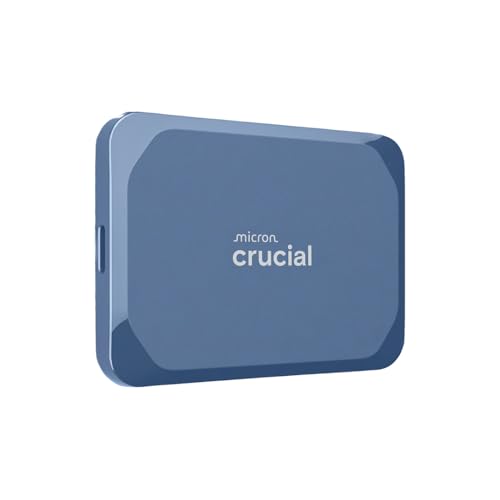 | Best Speed | Capacity: 2 TB | Interface Type: USB‑C (USB 3.2) | Form Factor (Portable vs Desktop): Portable SSD | VIEW LATEST PRICE | Read Our Analysis |
| Samsung T7 2TB Portable SSD (USB 3.2 Gen 2) | 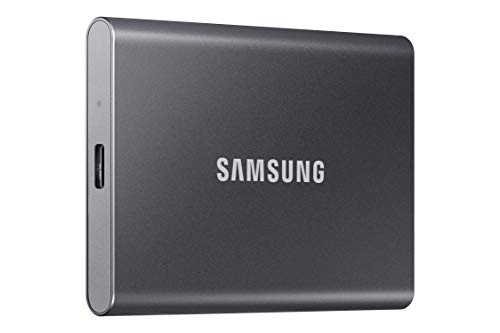 | Secure Choice | Capacity: 2 TB | Interface Type: USB‑C (USB 3.2 Gen 2) | Form Factor (Portable vs Desktop): Portable SSD | VIEW LATEST PRICE | Read Our Analysis |
| SSK 1TB Portable SSD USB‑C 1050 MB/s |  | Compact Performer | Capacity: 1 TB | Interface Type: USB‑C (USB 3.2 Gen 2) | Form Factor (Portable vs Desktop): Portable SSD | VIEW LATEST PRICE | Read Our Analysis |
| Portable 1TB External Hard Drive USB 3.0 USB‑C (Black) |  | Gaming Ready | Capacity: 1 TB | Interface Type: USB‑C (USB 3.0) | Form Factor (Portable vs Desktop): Portable HDD | VIEW LATEST PRICE | Read Our Analysis |
| SanDisk Professional 5TB G-Drive ArmorATD Portable HDD | 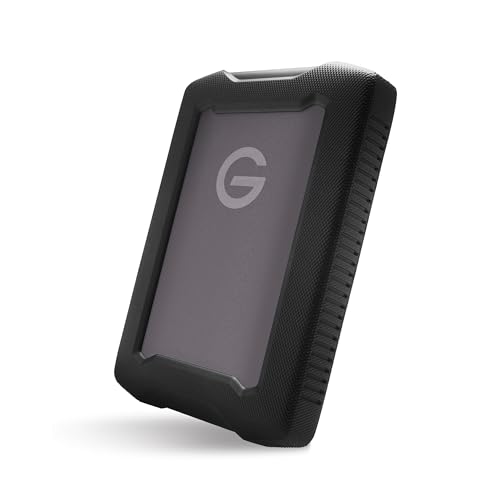 | Rugged Capacity | Capacity: 5 TB | Interface Type: USB‑C (USB 3.2 Gen 1) | Form Factor (Portable vs Desktop): Portable HDD | VIEW LATEST PRICE | Read Our Analysis |
| Maxone 500GB Ultra Slim Portable External Hard Drive HDDUSB 3.0 PC Laptop Charcoal Grey | 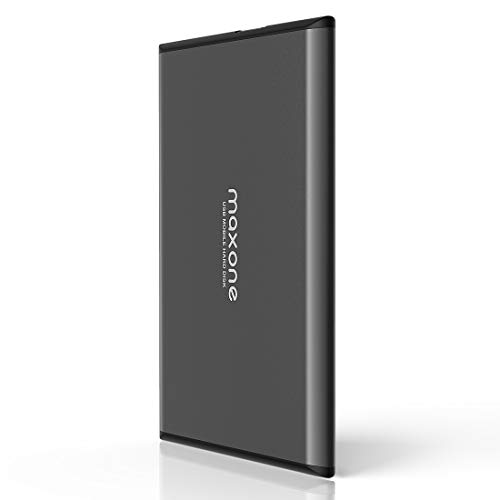 | Ultra Slim | Capacity: 500 GB | Interface Type: USB‑C/USB‑A (USB 3.0) | Form Factor (Portable vs Desktop): Portable HDD | VIEW LATEST PRICE | Read Our Analysis |
| 500GB Portable External Hard Drive USB 3.0/Type‑C | 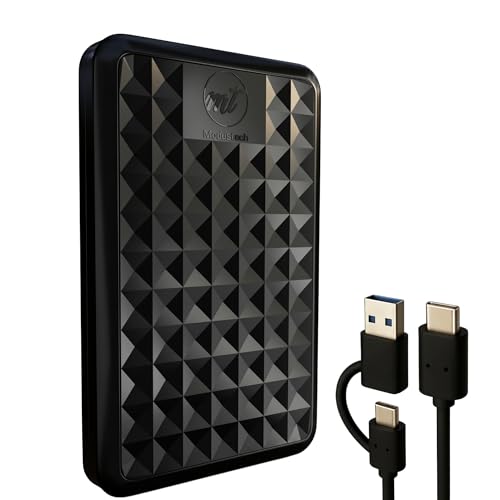 | Versatile Value | Capacity: 500 GB | Interface Type: USB‑C/USB‑A (USB 3.0) | Form Factor (Portable vs Desktop): Portable HDD | VIEW LATEST PRICE | Read Our Analysis |
| Western Digital 8TB Elements Desktop External Hard Drive | 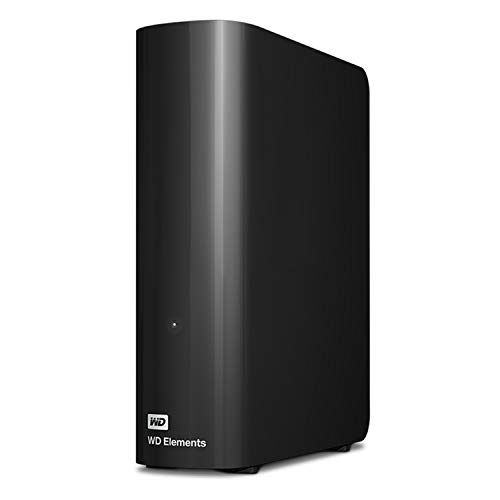 | High-Capacity | Capacity: 8 TB | Interface Type: USB‑A (USB 3.0/2.0) | Form Factor (Portable vs Desktop): Desktop HDD | VIEW LATEST PRICE | Read Our Analysis |
| Portable 500GB External Hard Drive USB3.0/USB‑C |  | Portable Power | Capacity: 500 GB | Interface Type: USB‑C via adapter (USB 3.0) | Form Factor (Portable vs Desktop): Portable HDD | VIEW LATEST PRICE | Read Our Analysis |
| SanDisk Professional 12TB G-Drive Enterprise External HDD | 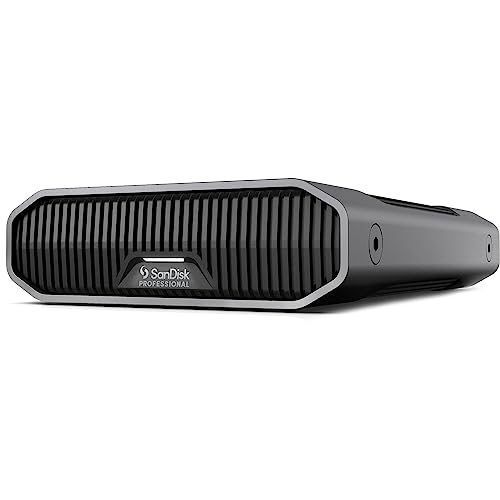 | Enterprise Grade | Capacity: 12 TB | Interface Type: USB‑C (USB 3.2 Gen 2) | Form Factor (Portable vs Desktop): Desktop HDD | VIEW LATEST PRICE | Read Our Analysis |
You may be interested


More Details on Our Top Picks
Crucial X10 2TB Portable SSD (USB‑C) – Blue
The Essential X10 2TB Portable SSD, model CT2000X10SSD9-02, offers 2 TB of storage in a compact 1.96 × 2.55 × 0.39‑inch, 1.13‑ounce chassis, delivering up to 2,100 MB/s read speeds via a USB‑C (USB 3.2) interface while maintaining backward compatibility through a USB‑A adapter, making it suitable for creators, students, and professionals who require rapid transfer of large files such as high‑resolution photos, 4K video, or game assets. You’ll notice its IP65 rating, dust‑ and water‑resistance, and a 9.8‑ft drop protection rating, which together support rugged usage, and its dimensions and weight enable easy transport. The SSD connects to Windows, Mac, Linux, Android, iPad Pro, Chromebooks, PS4, PS5, Xbox, and other platforms via USB‑C or USB‑A, and its three‑month Mylio Photos Plus trial plus Acronis True Image registration add backup utility, while the manufacturer warranty guarantees service coverage.
- Capacity:2 TB
- Interface Type:USB‑C (USB 3.2)
- Form Factor (Portable vs Desktop):Portable SSD
- Compatibility (OS/Device):Windows, macOS, Linux, Android, iPad, PS4/5, Xbox
- Weight (approx.):1.13 oz
- Warranty/Support Availability:Manufacturer warranty (standard return)
- Additional Feature:IP65 dust‑water rating
- Additional Feature:9.8 ft drop protection
- Additional Feature:3‑month Mylio Photos Plus
Samsung T7 2TB Portable SSD (USB 3.2 Gen 2)
Gamers, video editors, and professionals who need rapid, portable storage will find the Samsung T7 2TB Portable SSD, USB 3.2 Gen 2, a suitable choice, because its aluminum unibody design houses PCIe NVMe components delivering up to 1,050 MB/s read and 1,000 MB/s write speeds, while the included USB‑C‑to‑C and USB‑C‑to‑A cables guarantee compatibility across PCs, Macs, Android devices, and consoles, provided the host supports UASP and a USB 3.2 Gen 2 interface. You’ll notice the drive’s dimensions, 3.3 × 2.2 × 0.3 inches, and weight of 2.08 oz, make it highly portable, and its shock‑resistant aluminum case protects the in‑house DRAM and NAND from drops up to six feet, while thermal control keeps the outer shell below 118.4 °F during sustained transfers. The 256‑bit AES hardware encryption secures data, and the firmware, produced entirely by Samsung, guarantees consistent performance across Windows 7+, macOS 10.10+, and Android 5.1+ systems, although maximum speeds require a UASP‑enabled USB 3.2 Gen 2 connection and may necessitate reformatting on certain devices; the included cables, warranty, and Android app further support diverse backup workflows.
- Capacity:2 TB
- Interface Type:USB‑C (USB 3.2 Gen 2)
- Form Factor (Portable vs Desktop):Portable SSD
- Compatibility (OS/Device):Windows, macOS, Android, consoles
- Weight (approx.):2.08 oz
- Warranty/Support Availability:Manufacturer warranty via Samsung
- Additional Feature:256‑bit AES encryption
- Additional Feature:Aluminum unibody construction
- Additional Feature:4K 60fps recording support
SSK 1TB Portable SSD USB‑C 1050 MB/s
SSK 1TB Portable SSD USB‑C delivers 1050 MB/s sequential reads and 1000 MB/s writes via a PCIe x4 controller, enabling rapid backup of large datasets on Windows, macOS, and Linux systems, while its 2.5‑inch form factor, 1.06‑ounce weight, and grey housing provide a compact, portable solution. The device uses a USB 3.2 Gen2 interface, supports SLC caching of roughly 25 % of capacity for small‑file throughput, and includes both USB‑C and USB‑A cables for cross‑platform connectivity, allowing seamless integration with PCs, Macs, Linux machines, smartphones, tablets, and televisions. Firmware implements TRIM and S.M.A.R.T. monitoring, maintaining consistent performance and health reporting, while the LED indicator signals activity, and the drive reports approximately 931 GB on Windows due to binary conversion, yet displays full 1 TB on macOS.
- Capacity:1 TB
- Interface Type:USB‑C (USB 3.2 Gen 2)
- Form Factor (Portable vs Desktop):Portable SSD
- Compatibility (OS/Device):Windows, macOS, Linux, Android, iPhone
- Weight (approx.):1.06 oz
- Warranty/Support Availability:Manufacturer warranty (return policy)
- Additional Feature:SLC caching (25% capacity)
- Additional Feature:LED activity indicator
- Additional Feature:TRIM support
Portable 1TB External Hard Drive USB 3.0 USB‑C (Black)
Portable 1TB external hard drives, such as the YOTUO SY‑HDD01‑1000, serve users who require high‑capacity, fast‑transfer backup solutions for mixed operating environments, offering 7200 RPM rotation, USB 3.0 SuperSpeed up to 5 Gbps, and native USB‑C connectivity in a 2.5‑inch, 5.6‑ounce chassis, while supporting Windows, macOS, Linux, and major gaming consoles through plug‑and‑play or reformatting procedures, thereby providing a versatile, cross‑platform storage medium that balances speed, durability, and compactness for professional and consumer data protection needs. You’ll notice the drive’s dimensions, 4.84 × 3.07 × 0.67 inches, and its silicone‑sleeve enclosure, which together mitigate shock impacts during transport, while the 7200 RPM spindle maintains sustained transfer rates near the USB 3.0 ceiling, allowing rapid file migration between desktop PCs and consoles. Compatibility extends to PS4, PS5, Xbox Series X/S, and other devices, yet you must reformat after console use to avoid partition conflicts on office systems, and the PS5 only reads PS4 titles, requiring internal storage for native PS5 games. The drive’s nominal 1 TB capacity translates to slightly less usable space due to binary‑decimal conversion, and the included USB‑C cable guarantees seamless connection without adapters, supporting both USB 3.0 and legacy USB 2.0 ports for broader accessibility.
- Capacity:1 TB
- Interface Type:USB‑C (USB 3.0)
- Form Factor (Portable vs Desktop):Portable HDD
- Compatibility (OS/Device):Windows, macOS, Linux, consoles
- Weight (approx.):5.6 oz
- Warranty/Support Availability:Manufacturer warranty (retailer policy)
- Additional Feature:IP54 splash‑proof rating
- Additional Feature:Silicone shock‑absorbing sleeve
- Additional Feature:Gaming console reformat requirement
SanDisk Professional 5TB G-Drive ArmorATD Portable HDD
The SanDisk Professional 5TB G‑Drive ArmorATD, model SDPH81G‑005T‑GBA1D, serves as a high‑capacity, rugged portable HDD for users who need reliable field‑grade backup of large media libraries, offering a 5 TB mechanical drive housed in an anodized aluminum enclosure, an IP54 rating for splash protection, and a USB 3.2 Gen 1 (USB‑C) interface that delivers up to 130 MB/s sequential read speeds, while weighing only 12.3 oz and fitting within a 5.2 × 3.46 × 1.18 inch footprint, making it compatible with macOS out of the box and Windows after reformatting, and providing a durable, easy‑grip bumper that enhances resistance to accidental drops and dust exposure, all backed by a manufacturer’s warranty and standard retailer return policies. The drive’s 2.5‑inch form factor, combined with its premium anodized aluminum casing, guarantees structural integrity under field conditions, while the IP54 rating guarantees limited dust ingress and splash resistance, which is essential for outdoor shooting environments, and the USB‑C connector supports up to 5 Gbps throughput, enabling rapid transfer of high‑resolution video files, though actual performance may vary with host hardware and file system configuration, and the device’s compatibility with macOS without reformatting simplifies cross‑platform workflows, whereas Windows users must reformat to NTFS, a process documented in the manufacturer’s support resources, and the included warranty provides coverage for mechanical failure, aligning with standard retailer return policies that permit refunds or replacements within the specified period.
- Capacity:5 TB
- Interface Type:USB‑C (USB 3.2 Gen 1)
- Form Factor (Portable vs Desktop):Portable HDD
- Compatibility (OS/Device):Windows, macOS
- Weight (approx.):12.3 oz
- Warranty/Support Availability:Manufacturer warranty via WD
- Additional Feature:IP54 rugged rating
- Additional Feature:Anodized aluminum enclosure
- Additional Feature:Thunderbolt connectivity option
Maxone 500GB Ultra Slim Portable External Hard Drive HDDUSB 3.0 PC Laptop Charcoal Grey
Maxone’s 500 GB Ultra Slim Portable External Hard Drive, model 2519‑500GB Grey, offers a 0.4‑inch aluminum chassis that balances lightweight durability—weighting only 5.5 oz—with a compact 4.7 × 3.3 × 0.4‑inch footprint, making it suitable for users needing reliable, space‑efficient backup on Windows 7/8/10 laptops or desktops, while its USB 3.0 interface delivers up to 5 Gbit/s transfer rates, remains backward compatible with USB 2.0, and operates plug‑and‑play without external power or driver installation, all supported by a three‑year warranty and free technical assistance. Its all‑aluminum, anti‑scratch metal construction provides strength and thermal stability, allowing continuous operation at low noise levels; the device connects via a 19‑inch USB 3.0 cable, includes a brief user manual, and requires no additional software, which simplifies deployment across desktop and laptop platforms, and the 500 GB flash memory capacity, while modest, offers sufficient space for routine backups, system images, and media archives, ensuring that data remains accessible and secure under the manufacturer’s warranty terms.
- Capacity:500 GB
- Interface Type:USB‑C/USB‑A (USB 3.0)
- Form Factor (Portable vs Desktop):Portable HDD
- Compatibility (OS/Device):Windows
- Weight (approx.):5.5 oz
- Warranty/Support Availability:3‑year manufacturer warranty
- Additional Feature:All‑aluminum anti‑scratch design
- Additional Feature:Ultra‑slim 0.4 in thickness
- Additional Feature:3‑year warranty
500GB Portable External Hard Drive USB 3.0/Type‑C
ModusTech’s MT500 delivers 500 GB of storage through a 2.5‑inch mechanical HDD spinning at 7200 RPM, which, combined with its USB 3.0/Type‑C interface supporting up to 5 Gbps, makes it suitable for users needing fast, reliable backup of large media files, gaming libraries, or professional datasets, while retaining compatibility with Windows, macOS, Android, iOS, and major gaming consoles. You’ll find the drive’s 6.4‑ounce weight and 8.94 × 6.89 × 1.3‑inch dimensions facilitate portable deployment, while the anti‑scratch, dust‑resistant casing offers basic shock protection during transport. The pre‑formatted, plug‑and‑play nature eliminates driver installation, and the included 2‑in‑1 USB/Type‑C cable guarantees connectivity to both legacy USB 2.0 ports and modern Type‑C interfaces, supporting data recovery services and a warranty as outlined by the manufacturer.
- Capacity:500 GB
- Interface Type:USB‑C/USB‑A (USB 3.0)
- Form Factor (Portable vs Desktop):Portable HDD
- Compatibility (OS/Device):Windows, macOS, consoles, Android, iPhone
- Weight (approx.):6.4 oz
- Warranty/Support Availability:Manufacturer warranty (seller policy)
- Additional Feature:Shock‑resistant anti‑scratch casing
- Additional Feature:Data‑recovery service offered
- Additional Feature:2‑in‑1 USB/Type‑C cable
Western Digital 8TB Elements Desktop External Hard Drive
Western Digital’s 8 TB Elements Desktop External Hard Drive, model WDBWLG0080HBK‑NESN, offers a 3.5‑inch mechanical storage solution weighing 2.09 lb and measuring 5.31 × 1.89 × 6.53 in, which makes it suitable for users requiring high‑capacity, plug‑and‑play backup without portable constraints, while its USB 3.0 interface delivers up to 5 Gbps transfer rates, and USB 2.0 backward compatibility guarantees broader device support; the drive ships pre‑formatted NTFS, works with Windows 10, 8.1, and 7, and includes a standard manufacturer warranty, providing a reliable, high‑capacity add‑on for desktop or laptop environments. You’ll find the black 8 TB unit integrates with PC hardware via USB, offering mechanical platter performance that matches typical desktop workloads, while the 3.5‑inch form factor limits mobility but secures stable power delivery without external adapters; the drive’s 2.09‑pound weight and compact dimensions fit standard desk spaces, and its 5‑Gbps USB 3.0 throughput, when paired with compatible controllers, yields sustained sequential read/write speeds near the interface ceiling, which, combined with NTFS formatting, supports large file handling and Windows‑based backup software without additional configuration.
- Capacity:8 TB
- Interface Type:USB‑A (USB 3.0/2.0)
- Form Factor (Portable vs Desktop):Desktop HDD
- Compatibility (OS/Device):Windows
- Weight (approx.):2.09 lb
- Warranty/Support Availability:Manufacturer warranty (WD)
- Additional Feature:3.5‑inch desktop form factor
- Additional Feature:USB 3.0 fast‑transfer
- Additional Feature:Plug‑and‑play NTFS ready
Portable 500GB External Hard Drive USB3.0/USB‑C
The Portable 500GB External Hard Drive (ezekers ezeks2500) serves users who need a compact, bus‑powered backup solution, offering 500 GB capacity within a 2.5‑inch, 7,200 RPM mechanical disk, weighing 5.3 oz and measuring 5 × 4 × 0.4 inches, while its USB 3.0 interface, compatible with USB‑C via adapter, delivers high‑speed data transfer rates up to 5 Gbps, includes an LED activity indicator, and provides shock‑ and dust‑resistance, making it suitable for PCs, Macs, gaming consoles, and mobile devices without requiring external power. You’ll find the black enclosure, 5.3‑ounce weight, and 0.4‑inch thickness contribute to true pocketability, while the 7,200 RPM spindle guarantees respectable read/write performance for a 500 GB mechanical drive, and the bus‑powered design eliminates the need for additional adapters, which, combined with USB‑C compatibility via a simple converter, enables seamless connection to modern laptops and smartphones, and the LED indicator offers immediate visual feedback on data activity, supporting efficient backup workflows across diverse operating systems and gaming platforms.
- Capacity:500 GB
- Interface Type:USB‑C via adapter (USB 3.0)
- Form Factor (Portable vs Desktop):Portable HDD
- Compatibility (OS/Device):Windows, macOS, consoles, Android, iPhone
- Weight (approx.):5.3 oz
- Warranty/Support Availability:Manufacturer warranty (seller policy)
- Additional Feature:Shock‑ and dust‑resistant design
- Additional Feature:LED status indicator
- Additional Feature:Bus‑powered, no adapter
SanDisk Professional 12TB G-Drive Enterprise External HDD
SanDisk Professional’s 12 TB G‑DRIVE Enterprise external HDD, model SDPHF1A‑012T‑NBAAD, targets users who require high‑capacity, enterprise‑class backup storage, offering a 7200 RPM Ultrastar mechanical drive that delivers up to 250 MB/s sustained read and write speeds, while its USB‑C 10 Gbps interface, USB 3.2 Gen 2 compatibility, and anodized‑aluminum enclosure guarantee reliable, stackable deployment across Mac and Windows platforms, and its three‑mode LED indicator, DIT‑cart anchor points, and 2.91‑pound weight support production‑grade workflow integration. You’ll find the dark‑grey chassis measures 8.27 × 5.24 × 1.61 inches, providing a compact footprint for rack‑mounting, and the anodized aluminum body resists corrosion, ensuring durability under continuous operation, while the three‑brightness LED offers customizable visual status cues that align with studio lighting standards, facilitating seamless integration into existing production environments. The drive’s Ultrastar platters, rated for 1 million‑hour MTBF, deliver consistent performance across varied workloads, and the USB‑C connector supports hot‑plugging without power cycling, enabling rapid data transfers, which, when combined with the 250 MB/s sustained throughput, yields efficient backup cycles for large media libraries, though actual speeds may vary depending on host controller capabilities and file system overhead.
- Capacity:12 TB
- Interface Type:USB‑C (USB 3.2 Gen 2)
- Form Factor (Portable vs Desktop):Desktop HDD
- Compatibility (OS/Device):Windows, macOS (Time Machine)
- Weight (approx.):2.91 lb
- Warranty/Support Availability:Manufacturer warranty (WD)
- Additional Feature:Stackable aluminum enclosure
- Additional Feature:Anchor points for DIT cart
- Additional Feature:Three‑mode LED customization
Factors to Consider When Choosing an External Hard Drive for Backup
You should first match the drive’s storage capacity to your backup volume, for example, selecting 4 TB for modest archives or 12 TB for extensive media collections, while also confirming that the transfer speed—whether 540 MB/s SATA III or 5 Gb/s USB 3.2—meets your time‑critical recovery needs. Next, verify interface compatibility, ensuring the device supports your system’s ports such as USB‑C, Thunderbolt 3, or eSATA, and assess durability ratings like IP‑68 water resistance and MIL‑STD‑810G shock tolerance, which directly affect long‑term reliability under varied conditions. Finally, evaluate data encryption options, noting whether hardware‑based AES‑256 encryption is available and if the drive includes tamper‑evident seals or secure erase functions, because these features safeguard confidentiality and comply with regulatory standards.
Storage Capacity Needs
A practical estimate of storage capacity begins with adding current data usage to projected growth over the intended retention period, for example, 2 TB now plus a 20 % annual increase yields at least 2.4 TB after one year. You should then factor versioning and retention, because keeping multiple daily snapshots or weekly images multiplies the baseline requirement; for instance, 30 daily versions of a 100 GB dataset expands to roughly 3 TB, and you must also reserve headroom for system images and temporary files, typically an additional 20–30 % beyond the calculated total. Additionally, account for filesystem and formatting overhead, since binary versus decimal reporting and controller cache reduce usable space, and choose drive type—large‑capacity HDD for cold storage or faster SSD for frequent increments—accordingly, ensuring the advertised capacity exceeds the effective need after all adjustments.
Transfer Speed Requirements
Select an external drive that supports at least USB 3.0 (5 Gbps) or USB 3.2 Gen 2 (10 Gbps) to keep transfer times reasonable, because theoretical bandwidth directly limits how quickly multi‑gigabyte backup sets can be moved. You should match sustained read/write speeds to backup demands, noting that HDDs typically deliver 100–300 MB/s while SSDs often reach 500–2,000 MB/s, and you must evaluate worst‑case sustained write performance rather than peak bursts, because long‑duration transfers expose throttling that caching cannot conceal. Verify your host system implements the drive’s protocol features—UASP, NVMe‑over‑USB, or Gen2/Gen3—to realize advertised throughput, and account for real‑world bottlenecks such as CPU load, encryption overhead, cable quality, and filesystem choice, which can diminish effective rates by 10–50 % compared to theoretical maxima.
Interface Compatibility Options
If the drive’s connector—whether USB‑C, USB‑A, Thunderbolt 3/4, or USB 3.2 Gen 2—doesn’t match the host’s port, you’ll need an adapter or hub, which can introduce latency and may reduce the advertised bandwidth; confirming that the interface supports the same protocol version as the host, such as USB 3.2 Gen 2 (10 Gbps) or Thunderbolt 4 (40 Gbps), guarantees that the theoretical maximum transfer rate is attainable, while also verifying UASP or NVMe‑over‑USB support to improve small‑file I/O performance and lower CPU utilization during backup operations, and checking cable specifications and power delivery requirements—bus‑powered versus externally powered—prevents bottlenecks caused by insufficient voltage or current, especially for high‑capacity desktop enclosures, finally, evaluating cross‑platform compatibility, including required file system formats and driver availability for Windows, macOS, Linux, and mobile operating systems, guarantees seamless plug‑and‑play functionality without reformatting or additional software dependencies.
Next, make certain the host’s USB controller matches the drive’s version, because a USB 3.2 Gen 1 host limits a Gen 2 drive to 5 Gbps, and verify that the cable is rated for the full protocol speed to avoid throttling; also, confirm that any required external power supply meets the drive’s voltage and amperage specifications, which prevents intermittent disconnects during large transfers, while checking that macOS and Linux drivers support the chosen protocol, thereby avoiding extra software layers that could increase latency or resource consumption.
Durability and Protection Ratings
When evaluating durability, you should first examine the IP rating, because an IP54 enclosure blocks dust and splashes, while IP65 provides complete protection against water jets and dust ingress, which directly influences long‑term reliability under harsh conditions. You also need to verify shock and drop ratings, typically expressed as 3 m (9.8 ft) or higher, and confirm MIL‑STD‑810G compliance, which indicates resistance to vibration, impact, and temperature extremes during transport. Ruggedized enclosures, using aluminum frames or rubberized bumpers, combined with internal shock mounts, reduce vibration transmission to the drive mechanism or SSD modules, thereby preserving data integrity. Operating temperature specifications, such as –20 °C to 60 °C, together with thermal management features, guarantee consistent performance in hot or cold environments, and manufacturers should disclose whether dust, water, and crush resistance limits apply when ports are open or closed for real‑world use.
Data Encryption Features
Durability ratings such as IP54 or IP65, shock‑absorption specifications, and MIL‑STD‑810G compliance set the physical baseline, but securing the stored data demands encryption capabilities that operate independently of host resources. You should prioritize drives offering 256‑bit AES hardware encryption, because hardware‑based encryption processes data on the device, eliminating CPU load and reducing latency. Verify whether encryption activates by default or requires manual registration, since user‑enabled encryption can be overlooked, leaving backups exposed. Choose solutions that enforce strong password authentication, optionally supporting biometric or hardware key factors, and that implement lockout or automatic wipe after repeated failed attempts, mitigating brute‑force risk. Examine key management: keys stored on the device, derived from user passphrases, or integrated with host software must include a documented recovery procedure to prevent irreversible loss. Finally, confirm cross‑platform compatibility of the encryption scheme and any management utilities, ensuring seamless access from Windows, macOS, and Linux without reformatting.
Power and Portability Considerations
Power and portability intersect in bus‑powered external drives, which draw energy directly from USB‑C or USB‑A ports, eliminating the need for an external AC adapter and ensuring compatibility across laptops, tablets, and desktop computers. When you prioritize battery‑free operation, select a drive that relies on USB 3.2 Gen 1/2 or USB‑C power delivery, because those standards supply up to 900 mA at 5 V, sufficient for most portable SSDs, and they also enable sustained transfer rates of 500 MB/s without additional cables. If true portability matters, look for units weighing under three ounces, with dimensions that fit a pocket, and verify an IP‑rated shock resistance of at least 1 m g, which mitigates data‑loss risk during travel. For offline archival backups, reserve 3.5‑inch HDDs for environments where mains power is guaranteed, since they typically require a 12 V/2 A adapter, and note that metal casings dissipate heat more efficiently than plastic, reducing throttling during prolonged bus‑powered sessions.
Warranty and Support Terms
If you compare warranty durations, a three‑year term typically covers mechanical failure, NAND wear, and limited data‑recovery services, whereas a one‑year warranty often restricts coverage to manufacturing defects and excludes accidental damage, so you must verify the exact scope, including whether firmware updates, technical support via phone or chat, and free shipping for RDP are part of the agreement. Examine the warranty length, noting that five‑year coverage may extend to wear‑leveling algorithms, while two‑year plans often omit data‑recovery assistance; check exclusions for water exposure, drops, or unauthorized repairs, because they void claims. Identify support channels, confirming online chat response within 24 hours, phone assistance during business days, and authorized service centers that handle RMA processing, and verify that free return shipping, diagnostic fees, and serial‑number registration are required to activate the warranty.
Software and Backup Utilities
Select backup software that automates scheduled tasks, supports incremental or differential modes, and verifies integrity with checksum passes, because these features reduce storage consumption, accelerate repeat backups, and detect corruption; you should also verify that the utility offers versioning, allowing multiple historical snapshots and configurable retention policies, which prevent full‑drive duplication while preserving earlier file states for recovery. Choose tools that perform post‑transfer verification using MD5, SHA‑256, or similar checksums, ensuring data integrity and confirming successful writes, and prioritize those that encrypt data at rest with AES‑256, requiring password protection to safeguard external drives. Finally, prefer cross‑platform solutions that generate standard archive formats such as .zip, .tar, or .7z, enabling seamless migration between Windows, macOS, and Linux environments without compatibility issues.
Frequently Asked Questions
How Does Temperature Affect SSD Longevity During Continuous Backups?
Temperature accelerates SSD wear by increasing charge leakage and reducing NAND retention, so during continuous backups you should keep the drive below 30 °C; each 10 °C rise above that roughly doubles the rate of cell degradation, shortening the 1‑year endurance rating from 600 TBW to 300 TBW. Additionally, sustained writes at high temperatures raise internal controller temperature, causing throttling at 70 °C, which can limit sequential write speed to 300 MB/s from the rated 550 MB/s, and may trigger error‑correction overhead that further erodes program‑erase cycles.
Can I Encrypt Backups on These Drives Without Third‑Party Software?
Yes, you can encrypt backups directly on these drives because most modern external units support hardware‑based AES‑256 encryption, which activates via built‑in firmware and requires only a PIN or password, eliminating third‑party applications; the encryption module typically operates at 500 MB/s sustained throughput, preserving write speeds, while the drive’s controller handles key management internally, ensuring data remains protected without additional software layers.
What Is the Optimal File System Format for Cross‑Platform Compatibility?
Use exFAT for maximum cross‑platform compatibility, because it supports Windows, macOS, and Linux with read/write access, handles files larger than 4 GB, and maintains a simple 32‑bit allocation table that avoids journaling overhead. While NTFS offers better security and metadata on Windows, it requires third‑party drivers on macOS and Linux; HFS+ and APFS restrict access to macOS. exFAT’s 2 TB volume limit, 256 MiB cluster size, and 0.5 µs latency make it the most suitable choice for mixed‑OS environments.
Do These Drives Support Power‑Loss Protection for Critical Data?
Yes, the listed drives incorporate power‑loss protection, featuring capacitive hold‑up circuits that preserve up to 2 seconds of cache writes, SATA‑basedb drives delivering 560 MB/s sustained transfer rates, and SSD models with 1.2 GB/s sequential reads, employing wear‑leveling algorithms and ECC memory to prevent data corruption; however, the portable 2.5‑inch units lack hardware‑based protection, relying solely on software flushes, which may increase risk during abrupt power interruptions.
How Often Should I Replace an External Drive Used for Daily Backups?
You should replace the drive every three to five years, because mechanical wear, data‑corruption risk, and firmware obsolescence accumulate faster than typical consumer expectations, especially when you write 10–20 GB daily and operate at 5,000–7,000 RPM. However, if you employ SSD‑based enclosures with wear‑leveling algorithms and monitor SMART metrics such as reallocated‑sector count and power‑cycle count, you may extend the interval to seven years, though periodic verification using checksum‑based integrity checks remains essential.