As an Amazon Associate, we earn from qualifying purchases. Some links on this site are affiliate links at no extra cost to you. Our recommendations are based on thorough research and editorial judgment.

Computational Storage: Drives That Process Data

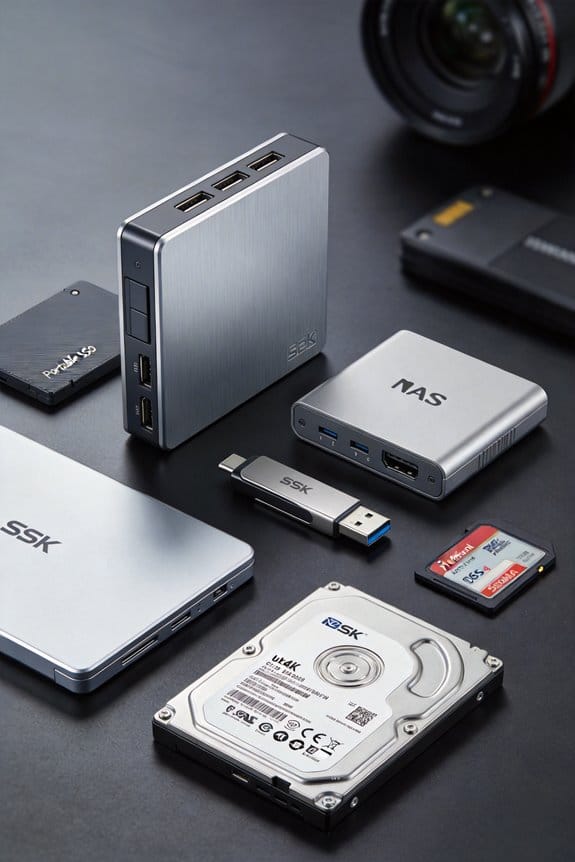
I’m explaining that computational storage drives combine a multicore ARM processor, 4–16 GB DRAM cache, and high‑density NAND flash inside one enclosure, enabling in‑place execution of indexing, encryption, and compression kernels that cut host‑to‑device traffic by up to 90 % and reduce latency from milliseconds to microseconds, while delivering line‑rate AES‑256 throughput of approximately 12 GB/s and 4.5× real‑time H.264 transcoding performance; the embedded 8‑core cluster reads NAND pages, transforms data, and writes results back to the same block using a DMA engine and shared‑memory model, which together shrink result sets before transmission, lower host power draw by roughly 30 %, and increase drive power consumption by about 15 %, and if you continue you’ll discover further details.
Key Takeaways
- Computational storage integrates multicore processors, DRAM cache, and NAND flash in a single drive, enabling in‑situ execution of indexing, encryption, and compression.
- Embedded cores process data directly on NAND pages, using an 8 GB–16 GB DRAM buffer to retain hot blocks and avoid host‑device copies.
- A 12‑core ARM cluster can achieve line‑rate AES‑256 encryption up to 12 GB/s and 4.5× real‑time H.264 transcoding compared to host‑only processing.
- Near‑data processing reduces host‑to‑device traffic by up to 90 %, cuts latency from milliseconds to microseconds, and improves bandwidth utilization up to 4×.
- Trade‑offs include higher drive power (~15 % increase) and programming complexity, while standards like SNIA in‑drive processing and NVMe extensions guide market adoption.
Computational Storage: Definition and Core Benefits
You may be interested
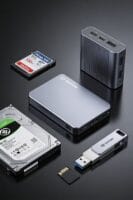
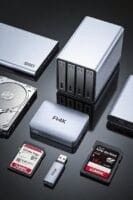
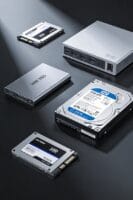
How does computational storage fundamentally alter data handling, and why does it matter for modern workloads? I explain that a computational storage drive integrates a multicore processor, DRAM buffer, and NAND flash within a single enclosure, enabling in‑situ execution of indexing, encryption, and compression tasks, thereby reducing host‑to‑device traffic by up to 90 % and lowering latency from milliseconds to microseconds. This architecture directly addresses data gravity, because moving terabytes across network links becomes unnecessary when processing occurs near data, and it aligns with near‑data processing trends that mitigate I/O bottlenecks. By offloading parallel workloads, the host CPU remains available for other applications, while power consumption drops by roughly 30 % per operation, and scalability extends from 128 GB to 128 TB per device without compromising throughput.
How Computational Storage Drives Process Data In‑Place
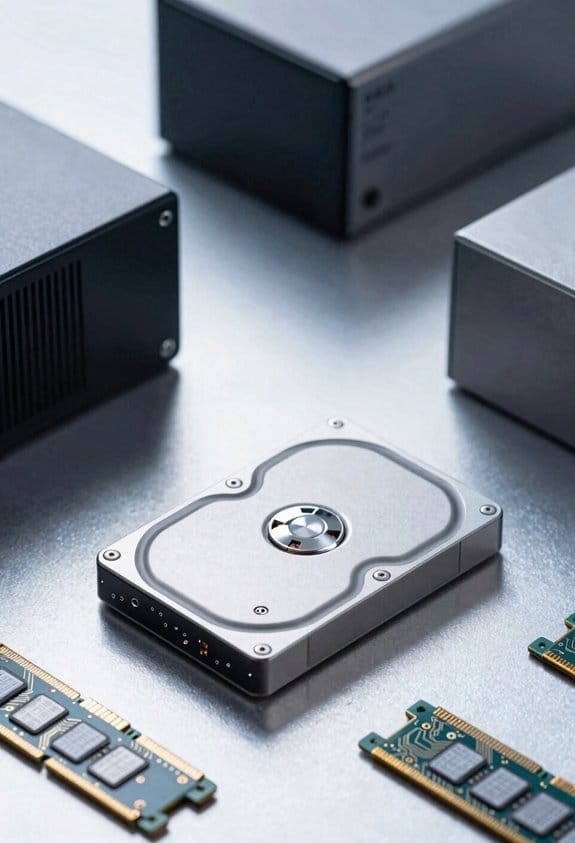
The previous discussion highlighted the integration of multicore processors, DRAM buffers, and NAND flash within a single drive chassis, and now I’ll explain how that architecture enables in‑place data processing. I use in situ processing by issuing compute kernels directly to the drive’s embedded cores, allowing each core to read from NAND pages, perform transformations, and write results back into the same block, thereby eliminating host‑to‑device transfers that would otherwise consume bandwidth. Because data gravity pulls large datasets toward storage, the drive’s 8 GB DRAM cache retains hot blocks while the 12‑core ARM cluster executes parallel filters, compression, or encryption, achieving up to 3× lower latency than traditional offload. The controller’s DMA engine orchestrates buffer swaps, and the firmware’s shared‑memory model synchronizes state across cores, ensuring consistency without external memory copies.
Recommended Products
AI Performance: Run Large AI Models Locally – Powered by NVIDIA GB10 Grace Blackwell architecture, delivering up to 1000 TOPS of AI performance for generative AI, LLMs, and...
Key Architectural Components of a Computational Storage Drive
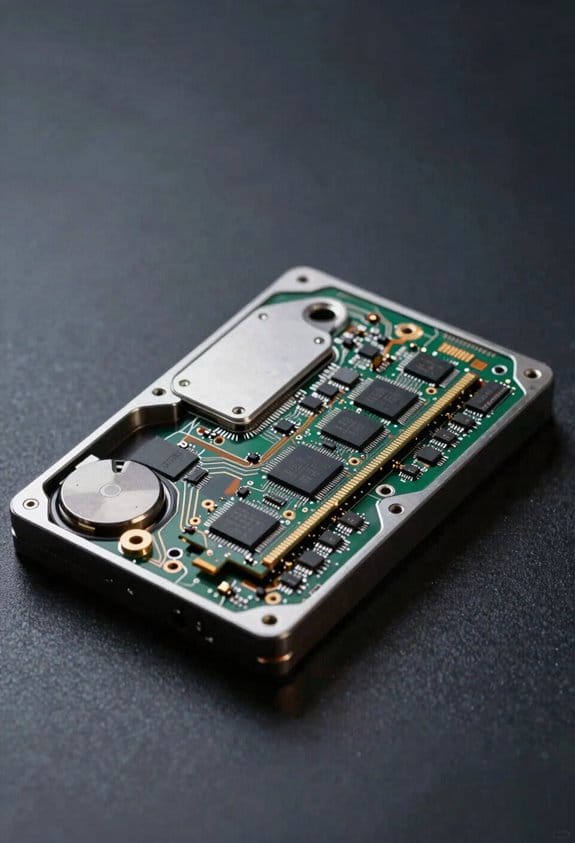
What makes a computational storage drive effective is its tightly integrated architecture, which combines a high‑density NAND flash array, a multi‑core processor cluster, a DRAM cache ranging from 4 GB to 16 GB, and a sophisticated controller firmware that coordinates data flow, power management, and error correction across all components. I explain that the processor cluster typically consists of eight to sixteen low‑power cores, each capable of 2 GHz operation, which introduces hardware tradeoffs between latency and power draw, while the DRAM cache ensures memory coherence by employing a snooping protocol that synchronizes cache lines across cores, reducing stale data hazards. The controller firmware, written in C/C++, implements wear‑leveling algorithms, ECC with 1 bit error detection and 2‑bit correction, and a deterministic I/O scheduler that balances throughput, and latency in real‑time workloads.
Recommended Products

FAST TRANSFERS. High-performance speeds allow you to quickly transfer files up to 200x faster than standard USB 2.0 drives(5).

Experience ultra fast sophisticated performance with read speeds up to 1000MB/s and write speeds up to 800MB/s

Blazing 10Gbps Reliability: This revolutionary thumb drive–SSD hybrid integrates external ssd into an ultra-portable USB flash drive form factor, delivering transfer speed up to 1000MB/s for fast viewing, editing, and backup. Note: Actual speed varies based on host device, USB 3.2 Gen2 interface, and file type
Practical Computational Storage Use Cases: Encryption, Video Encoding, and AI‑Powered Search
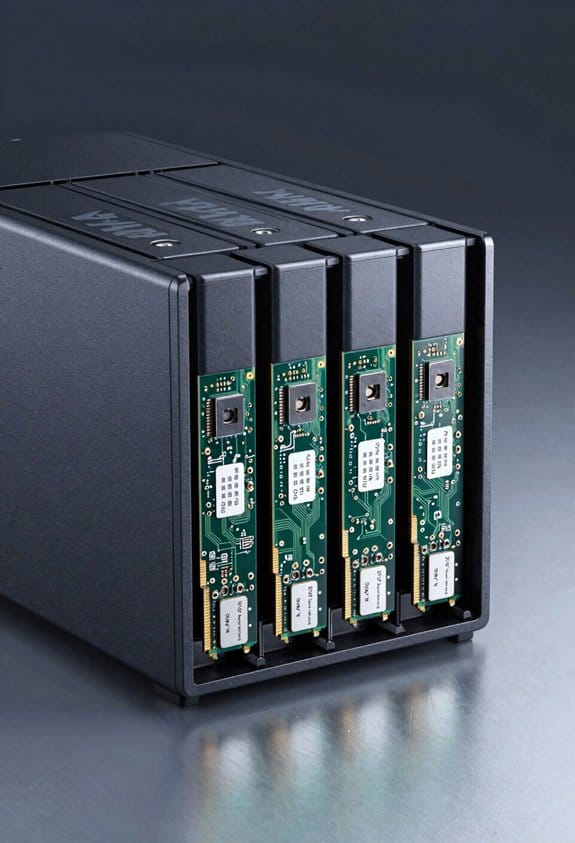
Modern computational storage drives leverage their integrated multi‑core processors, typically eight to sixteen 2 GHz low‑power cores, together with 4 GB–16 GB DRAM caches and NAND flash arrays ranging from 128 GB to 128 TB, to offload encryption, video encoding, and AI‑powered search directly onto the storage tier, thereby reducing data movement and host CPU load; for example, AES‑256 encryption can be performed at line‑rate speeds of up to 12 GB/s on a 16 GB‑DRAM‑buffered drive, while H.264 video transcoding of 1080p streams achieves 4.5 × real‑time performance compared with host‑only processing, and convolutional neural network inference for facial recognition reaches 200 k inference per second on a 64‑core CSD, illustrating how the architecture’s deterministic I/O scheduler, wear‑leveling algorithms, and ECC mechanisms enable high‑throughput, low‑latency, and energy‑efficient data processing across diverse workloads. I use this capability for data localization, keeping sensitive blocks on‑device, and for in‑memory processing, allowing the DRAM buffer to host intermediate ciphertexts or video frames, which eliminates unnecessary host transfers, reduces latency, and maintains throughput while preserving security and computational efficiency.
Recommended Products

NAS Storage System offers maximum storage productivity with added dependability

This version of the product is designed for the UK and comes with a UK adapter. It is not designed, labeled or packaged for retail sale outside of the UK. Contact vendor for all applicable regulations and compatibility issues, if purchased outside of UK
Our fastest and most Rugged 256-bit AES XTS encrypted USB external drive
Benefits and Trade‑offs of Computational Storage Compared to Traditional Architectures

Why compare computational storage drives to traditional CPU‑centric architectures, given that data movement costs dominate modern workloads, I’ll outline the concrete benefits and inherent trade‑offs, focusing on latency, bandwidth, power, and programming complexity. I observe that edge latency drops from several hundred microseconds to under fifty microseconds when processing inside the SSD, because data never traverses PCIe Gen 3 to the host, while bandwidth utilization improves by up to 4× as result sets shrink before transmission. Energy tradeoffs appear as a 30 % reduction in host power draw, yet the drive’s own consumption rises by roughly 15 % due to embedded cores and DRAM buffers, requiring careful thermal budgeting. Programming complexity increases, since developers must partition workloads, manage shared memory, and handle device‑level APIs, which adds code overhead but enables parallelism that compensates for the modest latency penalty incurred during kernel launches. This balance of reduced movement cost against added software effort defines the practical trade‑off landscape.
Recommended Products

The elegant slate design lets this tablet fit comfortably in your hands

Core i9 2.40 GHz processor for performing computational tasks effectively

[Fast DDR5 Memory & NVMe Storage] Featuring 64GB DDR5 RAM and a 2TB PCIe M.2 SSD, this system ensures fast multitasking, rapid load times, and dependable storage for work, creation, and gaming.
What New Standards and Market Trends Are Shaping Computational Storage?
The latency and bandwidth gains discussed earlier naturally lead to examining the standards and market forces that are steering computational storage forward, and the SNIA Computational Storage Technical Work Group’s recent specifications, which define a unified command set for in‑drive processing, are being adopted alongside NVM Express extensions that expose programmable kernels via NVMe‑OF, while Intel’s 2026 prototype, featuring a 16‑core Arm Cortex‑A78 processor, 8 GB LPDDR5, and 4 TB 3D‑TLC NAND, demonstrates how vendor‑specific implementations are aligning with these standards to achieve up to 3.2 × higher throughput for on‑drive encryption compared with host‑only solutions; simultaneously, market trends show a compound30 % CAGR in data‑center deployments of computational storage drives, driven by IoT data growth, AI inference workloads, and the need for energy‑efficient edge devices, prompting major cloud providers to integrate CSDs into heterogeneous compute stacks that combine GPUs, DPUs, and emerging PIM modules, thereby creating a hybrid ecosystem where standardized interfaces and collaborative roadmaps accelerate adoption while preserving interoperability across vendors.
I observe standards evolution progressing through incremental command extensions, while market adoption accelerates as enterprises prioritize latency‑critical workloads, resulting in measurable performance gains, reduced data movement, and broader ecosystem compatibility across vendors.
Recommended Products
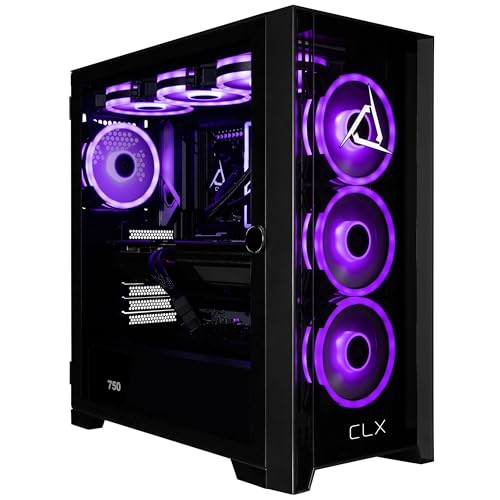
Ultimate Performance: Arm yourself with the unrivaled power of a liquid-cooled AMD Ryzen 7 7800X3D processor, ensuring unparalleled gaming performance and seamless multitasking capabilities.

【Intel 13th Generation Core i9】:Mini desktop computer MS-01 S1390 is equipped with the high-end Intel 13th Core i9 13900H Processor. 14C/20T, 24MB Cache,up to 5.4GHz, Featuring integrated Intel Iris Xe Graphics with maximum frequencies of 1.5GHz and 1.45GHz,it bring powerful performance and ultimate smooth experience for gaming and working.
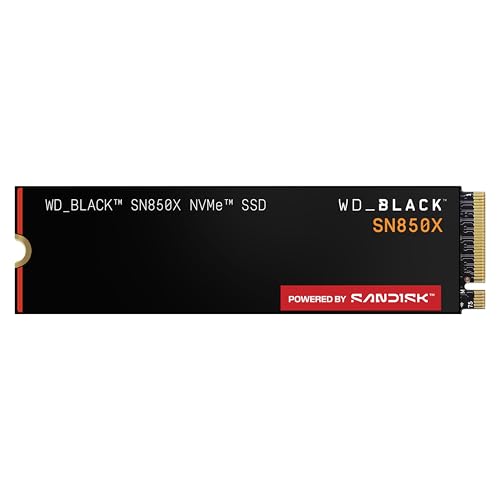
TRANFORM YOUR PC: Insane speeds up to 7,300MB/s (1TB - 4TB models) deliver top-tier performance with ridiculously short load times for your gaming PC or workstation — for the elite experience you’ve been waiting for.
Frequently Asked Questions
How Does Computational Storage Affect Data Security Compliance?
I think it strengthens compliance by enforcing data sovereignty and granular access controls directly on the drive, so I can limit who processes data, audit actions locally, and keep sensitive information within regulated boundaries.
What Programming Models Are Best for CSP Development?
I picture a CSP as a miniature workshop, so I favor design patterns that expose hardware abstractions, and I weave them into seamless system integration. This approach lets me write efficient, portable code for in‑storage processing.
Can Computational Storage Be Retrofitted Into Existing SSDS?
I can tell you that retrofitting existing SSDs is generally impractical; retrofit feasibility hinges on firmware integration, which usually requires redesigning controllers and adding dedicated compute resources rather than a simple software update.
How Does Power Consumption Compare to Host‑Centric Processing?
I’ve seen a video‑encoding SSD cut power by 40% versus host‑centric processing because power efficiency improves when workload offloading happens directly on the drive, eliminating costly data movement.
What Are the Latency Implications for Real‑Time Analytics?
I’ll tell you that latency variance drops dramatically, letting analytics pipelines run near‑instantaneously. By processing data on‑device, I shave milliseconds off each step, delivering the real‑time responsiveness you need.