As an Amazon Associate, we earn from qualifying purchases. Some links on this site are affiliate links at no extra cost to you. Our recommendations are based on thorough research and editorial judgment.


E-Waste Impact: Drive Recycling Realities

I’m seeing global e‑waste at 62 million tonnes in 2022, projected to reach 82 million tonnes by 2030, a 33 % rise driven by 2.6 million tonnes annual additions and shrinking device lifecycles, while recycling rates fall from 22.3 % to an estimated 20 % by 2030, leaving roughly 78 % unmanaged; formal processing currently handles 42.8 % in Europe, 41.4 % in Oceania, 30 % in the Americas, 11.8 % in Asia, and 0.7 % in Africa, yet achieving a 60 % recycling target could recover 37 million tonnes annually, cut virgin ore extraction by 15 %, and generate $38 billion in net benefits, so continuing will reveal further details.
Key Takeaways
- Global e‑waste will rise to 82 Mt by 2030, but recycling rates may fall to 20 %, leaving 78 % unmanaged.
- Formal processing dominates only in Europe (≈43 %) and Oceania (≈41 %); low‑income regions rely on informal handling of ~18 Mt.
- Achieving a 60 % recycling rate could recover ~37 Mt annually, cutting virgin ore extraction by 15 % and saving billions in net benefits.
- Advanced hydrometallurgy and AI‑driven sorting can boost material recovery (up to 95 % gold, <2 % contaminants) while reducing costs by ~12 %.
- Urban‑mining market growth is projected from $1.98 B in 2026 to $3.11 B by 2030, driven by automation and higher recycling throughput.
How Fast Is Global E‑Waste Growing and Why Recycling Matters?
You may be interested



How fast is global e‑waste expanding, and why does recycling matter? I report that 62 million tonnes were generated in 2022, a figure projected to reach 82 million tonnes by 2030, a 33 % increase driven by a 2.6 million‑tonne annual rise, while the global lifecycle of devices shortens, creating higher turnover. I note that recycling rates decline from 22.3 % in 2022 to an estimated 20 % by 2030, meaning 78 % of waste remains unmanaged, yet achieving a 60 % rate could yield $38 billion in net benefits. I highlight policy gaps, as only 37 countries set official targets, and I explain that these gaps hinder coordinated collection, formal processing, and resource recovery, thereby amplifying environmental and economic risks.
Where Does E‑Waste End Up? Formal vs. Informal Recycling by Region

Where does e‑waste end up, and what proportion follows formal versus informal pathways across regions? I report that Europe processes roughly 42.8 % of its e‑waste formally, Oceania 41.4 %, the Americas 30 %, Asia 11.8 % and Africa 0.7 %, while the informal sector dominates in low‑income countries handling about 18 million tonnes, compared with 16 million tonnes managed informally in high‑income nations. I note that cross‑border shipping moved 5.1 million tonnes in 2022, 65 % of which went to low‑income destinations, often entering informal streams. I explain that formal facilities in Europe recycle up to 7.5 kg per capita, whereas informal operations in Asia and Africa recover only a fraction, typically under 1 kg per capita, reflecting infrastructure gaps and regulatory differences.
Recommended Products

DIP POWDER: This dip powder nail kit features 20 trendy colors(0.35 oz each), perfect for any season. Whether you're going for a professional, polished look for work or a...
What Benefits Come From Reaching a 60 % E‑Waste Recycling Rate?

Why does a 60 % e‑waste recycling rate matter, given that it would generate over $38 billion in net benefits exceeding the associated costs, while simultaneously reducing the 78 % unmanaged waste fraction that currently burdens ecosystems and resource cycles? I explain that achieving this threshold would recover approximately 37 million tonnes of material annually, thereby decreasing demand for virgin ore extraction by an estimated 15 %, reducing associated energy consumption and greenhouse‑gas emissions, and supplying critical metals such as copper, gold, and rare earths to supply chains; this effect is amplified when global incentives align with municipal programs that standardize collection, enforce formal processing, and fund advanced sorting technologies, creating a feedback loop that improves compliance rates, lowers per‑tonnage processing costs, and stabilizes market prices for recovered commodities, ultimately supporting circular‑economy objectives.
Recommended Products

Blue recycling container for use in food preparation and service settings

Size: 20" W x 12.5" D x 30.25" H | Compact Size for Smaller Spaces | 9 gal. Plastic Bin Included! (fits 13 gal. trash bags)
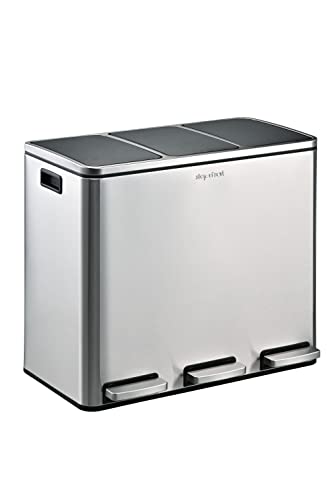
Use the three removable inner bins to separate and sort your waste, recyclables, and organics
Which Devices Generate Most E‑Waste and Their Recycling Rates?

Which devices dominate global e‑waste streams, and what are their respective recycling rates? I explain that small IT equipment, especially smartphones and laptops, accounts for roughly 4.6 million tonnes, with a recycling rate near 22 %, while larger household appliances such as refrigerators and washing machines contribute over 20 million tonnes and achieve about 12 % recycling, reflecting devices trends that favor high‑volume, low‑value items. I note that screens and televisions, comprising roughly 5 million tonnes, reach a higher collection rate of 30 % due to bulkier design and easier handling, whereas toys and microwaves add another 20.4 million tonnes with a modest 12 % recycling outcome. Global capacity for formal processing remains limited, with Europe achieving 42.8 % formal collection, Oceania 41.4 %, the Americas 30 %, Asia 11.8 %, and Africa only 0.7 %. This distribution highlights regional disparities in e‑waste management infrastructure and regulatory enforcement.
Recommended Products
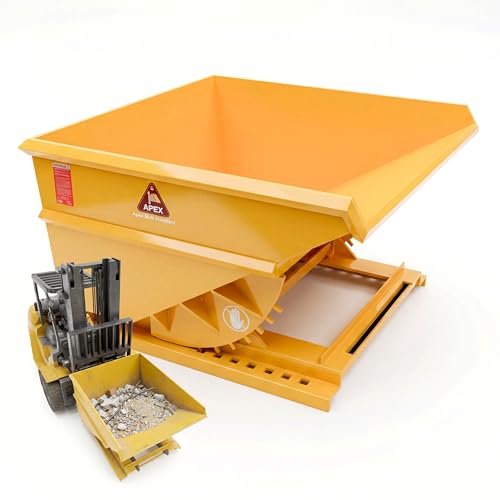
HIGH VOLUME 3 YARD CAPACITY – 3 cubic yard (approx. 2.29 m³) hopper is built for the largest forklift scrap routes and cleanup tasks, consolidating high volumes of waste to reduce trips to compactors, balers or dumpsters.
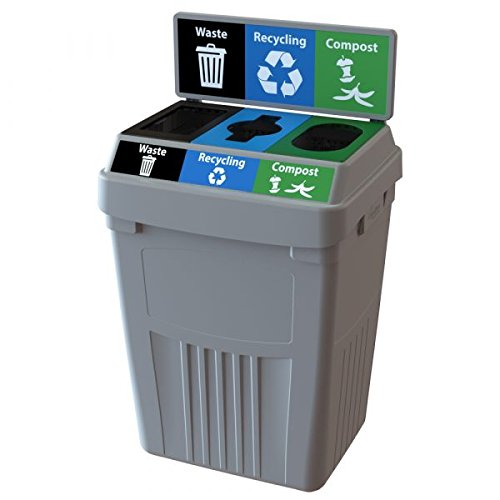
TOP QUALITY: Sturdy 50G/189L 3-in-1 waste and recycling bin with clear signage to help keep your waste and recycling separate. Perfect in any space, great in any environment, from commercial businesses and restaurants, to your own home, garage, hospitality, shopping malls - any area that could benefit from efficient waste removal
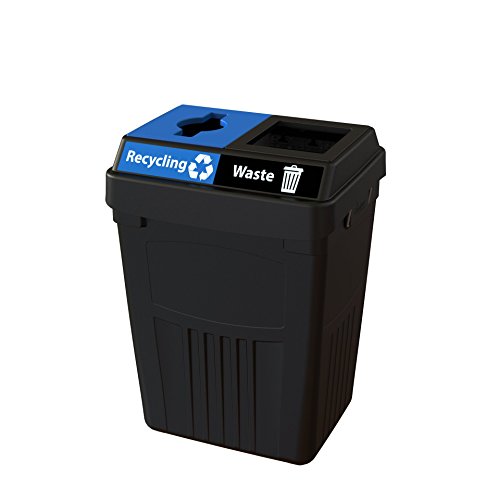
TOP QUALITY: Sturdy 50G/189L 2-in-1 waste and recycling bin with clear signage to help keep your waste and recycling separate. Perfect in any space, great in any environment, from commercial businesses and restaurants, to your own home, garage, hospitality, shopping malls - any area that could benefit from efficient waste removal
How New E‑Waste Recycling Technologies Are Changing the Market?

How significantly are emerging recycling technologies reshaping the e‑waste market, given that advanced hydrometallurgical processes now recover up to 95 % of gold and 85 % of copper from printed‑circuit boards, while robotic disassembly lines increase material separation efficiency by 30 % compared with manual sorting, and AI‑driven optical sorting systems reduce contaminant inclusion to below 2 % in mixed‑stream streams, thereby lowering operational costs by an estimated 12 % and expanding throughput capacity from 1.2 million tonnes per year to 1.8 million tonnes within the same facility footprint? I observe that these emerging technologies, by integrating automated sorting with real‑time sensor feedback, produce tighter material streams, enabling urban mining operations to extract higher‑grade metals at lower energy input, which in turn triggers market disruption as traditional smelting facilities confront reduced demand. The combined effect of higher recovery rates, faster cycle times, and lower waste ratios translates into measurable cost efficiencies, supporting projected market growth from $1.98 billion in 2026 to $3.11 billion by 2030, while also encouraging investment in modular processing plants that can be scaled without expanding physical footprints.
Recommended Products

GOLD PROSPECTING EQUIPMENT: 18pc gold panning kit has everything fine gold extraction, recovery, clean up and storage FINE GOLD RECOVERY TOOLS: Pipettes, snifter bottles,...
What Practical Steps Can Consumers and Companies Take to Boost Recycling?
What practical steps can consumers and companies adopt to boost recycling, given that 62 million tonnes of e‑waste were generated in 2022 and only 22 % was formally collected? I recommend that consumers prioritize consum er choices such as purchasing modular devices, extending product lifespans through repair, and using certified take‑back programs, while companies should integrate corporate responsibility policies that mandate design‑for‑disassembly, invest in automated sorting technologies, and publish transparent recycling metrics, thereby aligning supply chain incentives with measurable recovery rates, which, when combined with standardized labeling, facilitate efficient material segregation, improve downstream processing yields, and support circular economy objectives, ultimately increasing formal collection percentages toward the projected 60 % target.
Recommended Products

Ni-chrome compression wound heating elements are proven to be the most reliable heating element for maintaining soldering temperature in production environments
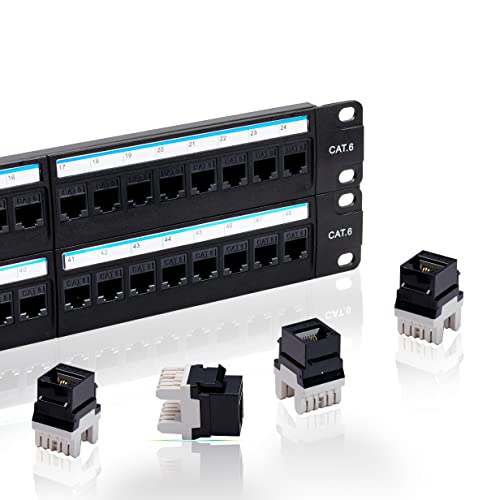
Easy Install: keystone based patch panels inserts with punchdown blocks jack and punch down on a keystone jack much more easily than in a 110 patch panel, especially for limited rack space.

Ultralight 35-liter roll-top dry sack is the ideal dry storage and organizing option for backpacking, bike touring, and travel
Frequently Asked Questions
How Are E‑Waste Regulations Differing Between High‑ and Low‑Income Countries?
I see high‑income nations enforcing strict standards and formal collection, while low‑income regions rely on informal processing; those thematic gaps create policy mismatches, leaving many devices unregulated and recycling pathways uneven.
What Economic Incentives Exist for Informal E‑Waste Recyclers?
I’ll tell you the truth: informal recyclers earn distributor incentives and benefit from high scrap buyer margins, turning discarded phones into cash‑flow lifelines that sustain their daily livelihoods.
How Does E‑Waste Affect Biodiversity in Landfill Sites?
I tell you e‑waste releases toxins that seep into soil, killing microbes and plants, while landfill fragmentation spreads those pollutants, dramatically reducing biodiversity around the site.
What Role Do Extended Producer Responsibility (EPR) Schemes Play Globally?
I’ve seen a small town turn e‑waste into a community garden fund; EPR schemes channel recycling funding, while policy harmonization guarantees those funds flow across borders, boosting global collection and reuse.
How Can Blockchain Improve Traceability in E‑Waste Recycling Supply Chains?
I’ll tell you blockchain can boost data tracing and supply provenance by recording each device’s hand‑off on an immutable ledger, letting you verify recyclers, certify material recovery, and spot irregularities instantly.