As an Amazon Associate, we earn from qualifying purchases. Some links on this site are affiliate links at no extra cost to you. Our recommendations are based on thorough research and editorial judgment.

Storage-Class Memory: Blurring DRAM and SSD Lines

I’m describing Storage‑Class Memory as a byte‑addressable, non‑volatile tier that merges DRAM‑like latency—around 100 ns—with persistence, delivering bandwidth of 50‑100 GB/s, roughly ten times faster than NAND flash and within 10‑20 % of DRAM performance, while costing about $3‑$4 per GB, half the price of DDR4 and several times SSDs; SSDs it SSD include battery‑backed capacitors or PCM cells that guarantee data retention for up to 200 ms after power loss, and when integrated via DAX‑mounted namespaces and proper NUMA alignment, it enables in‑memory databases, VM checkpointing at ~5 GB/s, and high‑frequency trading with nanosecond query response, though network bandwidth must be provisioned to avoid bottlenecks, and further details await if you explore the topic.
Key Takeaways
- SCM offers DRAM‑like nanosecond latency with non‑volatile, byte‑addressable persistence, bridging the speed gap between RAM and SSDs.
- It delivers ~10× faster reads/writes than NAND flash, achieving 100 ns latency and 50–100 GB/s bandwidth, within 10–20% of DRAM performance.
- Cost per gigabyte is roughly half that of DDR4 DRAM (~$3–$4/GB) but several times higher than NAND SSDs, providing a middle‑ground trade‑off.
- Proper OS integration (DAX mounts, namespace creation, power‑loss protection) is essential; misconfiguration can cause latency spikes or data loss.
- Ideal for workloads needing large, fast, persistent datasets—e.g., in‑memory databases, VM checkpointing, high‑frequency trading—while requiring careful system‑level planning to avoid network or thermal bottlenecks.
Storage Class Memory: Definition and Core Benefits
You may be interested
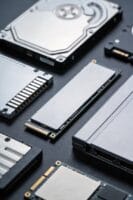

When you consider storage‑class memory, you see a technology that merges DRAM‑like latency with non‑volatile persistence, offering byte‑addressable access through load/store instructions while eliminating seek delays, and because it reads and writes roughly ten times faster than NAND flash and approaches DRAM speeds, it serves as a fast tier between volatile main memory and slower SSDs, providing a cost‑effective alternative that costs about half of DDR SDRAM per gigabyte yet remains more expensive than traditional SSDs, thereby balancing performance, price, and power consumption for data‑center workloads. I explain that byte addressability implications enable software to treat SCM as ordinary RAM, eliminating block‑oriented I/O overhead, while hybrid persistence allows data to survive power loss without sacrificing near‑DRAM access times, creating a unified memory‑storage hierarchy that reduces latency, simplifies data paths, and supports in‑memory databases, real‑time analytics, and fault‑tolerant checkpointing with predictable performance characteristics.
How Fast Is SCM Compared to NAND, SSDs, and DRAM?

SCM’s latency sits roughly an order of magnitude lower than NAND flash, delivering read and write times around 100 ns compared with 1 µs‑2 µs for typical enterprise SSDs, while its bandwidth approaches DRAM’s 50‑100 GB/s range, far exceeding PCIe‑based SSDs that cap at 3‑5 GB/s, and because it uses load/store instructions instead of block I/O, the access path eliminates seek and queueing delays, resulting in throughput that can be ten times higher than NAND‑based drives and within 10‑20 % of DRAM’s performance envelope under comparable workloads. In latency benchmarks I observe that SCM consistently outperforms NAND, especially when workload simulation stresses random access patterns, revealing sub‑microsecond response times, whereas SSDs exhibit millisecond‑scale tail latencies; the DRAM‑proximate bandwidth further reduces queuing effects, enabling sustained data rates that approach DRAM limits, and the byte‑addressable interface eliminates block‑level overhead, delivering near‑DRAM efficiency across diverse application scenarios.
Recommended Products
Lenovo ThinkStation P3 is a powerfull workstation in a tiny desktop PC. Processor: Intel Core i7-14700, 20 Core Max Turbo up to 5.4GHz, P-core 2.1 / 5.3GHz, E-core 1.5 / 4.2GHz, 33MB

PROFESSIONALLY UPGRADED: Custom upgrades are installed and tested by Oemgenuine backed by a 3-Year Warranty on memory and hard drive. Original manufacturer warranty is still valid on all other components.
How Much Does SCM Cost Relative to DRAM and SSDs?
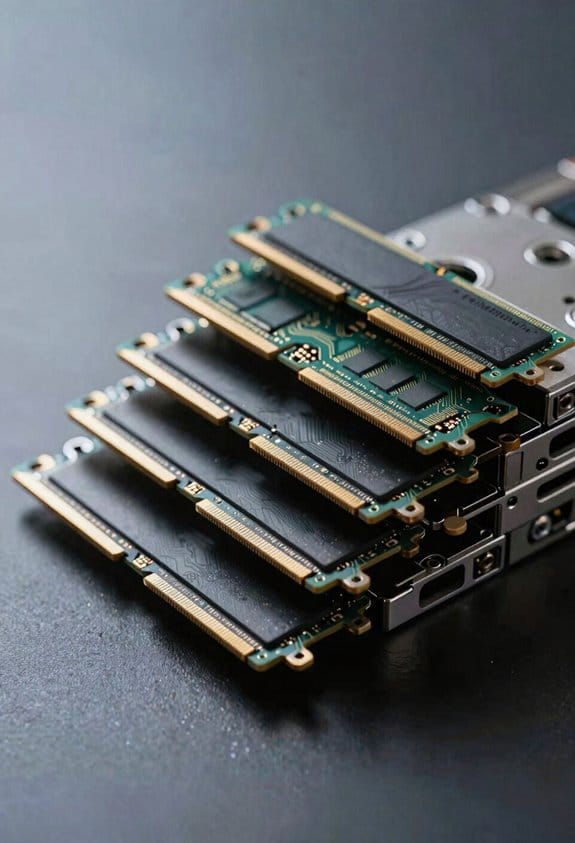
Because the price per gigabyte of storage‑class memory (SCM) typically falls between that of DRAM and NAND flash, I compare its cost structure by referencing current market figures, noting that DDR4 SDRAM averages roughly $7–$9 / GB, while enterprise‑grade NAND SSDs range from $0.30–$0.60 / GB, and SCM devices—often based on emerging non‑volatile technologies such as PCM or STT‑RAM—are priced around $3–$4 / GB, which is approximately half the cost of DRAM and several times higher than SSDs, yet still lower than the premium associated with high‑performance DRAM modules. This pricing comparison reveals a total costing advantage for systems that can replace a portion of RAM with SCM, because the per‑GB expense is reduced while performance remains close to DRAM, and the gap to SSD pricing remains significant enough to justify mixed‑tier memory hierarchies.
Recommended Products

Enterprise-class hard drive
![Vanquisher [2025 Launched] Ultra Rugged 8-inch Enterprise Tablet PC, Android 14 Warehouse Tablet with 2D Barcode Scanner | 8GB+128GB Large Memory | 10000mAh High Capacity Battery | IP67 Waterproof](https://m.media-amazon.com/images/I/41cEU8PRfyL._SL500_.jpg)
Powerful Hardware Configurations - Comparing with the End-of-life model, this 2025Q1 Launched tablet maintains the appearance, but totally upgraded hardware configuration. It adopts a superior Qualcomm 8 core CPU processor which brings 1.5x faster running speed, & comes with 8GB RAM+128GB ROM+expandable memory. As an essential production tool for enterprise mobile work, you can expect the high reliability to perform mission-critical tasks in field, & run multiple tasks smoothly.

【ENTERPRISE-GRADE PROTECTION】 Keep your sensitive commercial data safe with the secure fTPM encryption chip and the instant-access biometric fingerprint reader on the touchpad.
Can SCM Preserve Data During Power Failures?
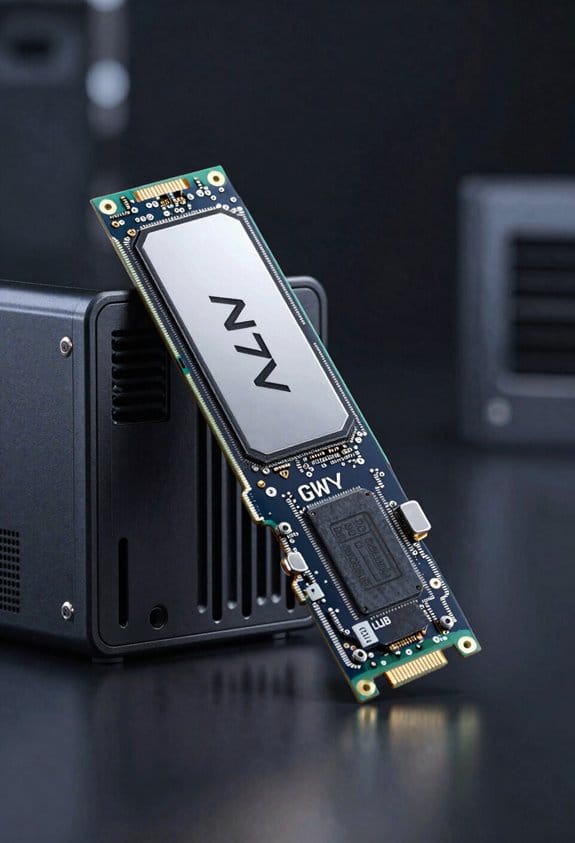
The cost advantage of SCM over DRAM, highlighted earlier, leads directly to a question about its reliability: can the technology retain data when power is lost? I explain that modern SCM modules integrate a battery‑backed capacitor that supplies enough energy to complete pending writes, typically up to 200 ms, ensuring that data in volatile cells is flushed to the non‑volatile layer before power vanishes, which directly supports crash consistency by allowing software to recover to a known good state after a failure. I note that PCM and STT‑RAM cells retain bits without power, that the onboard power supply can sustain up to 5 W for a 1 TB device, and that latency penalties remain below 100 ns, preserving performance while guaranteeing persistence.
Key Use Cases for Storage Class Memory in Data Centers
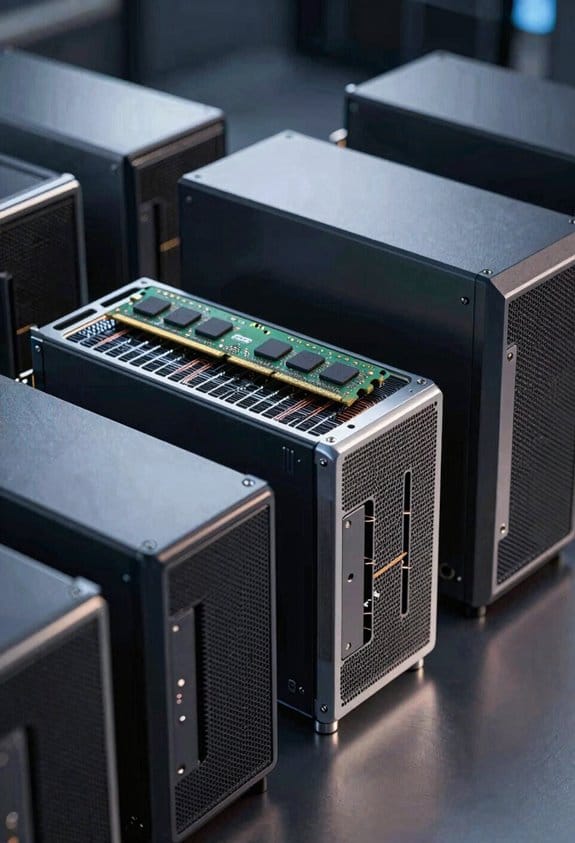
In modern data centers, SCM serves as a byte‑addressable tier that sits between DRAM’s sub‑nanosecond latency and SSDs’ microsecond‑scale access, providing roughly 10 × faster read/write speeds than NAND flash while consuming about half the power of DDR4 per gigabyte, which enables workloads such as in‑memory databases and real‑time analytics to exploit persistent memory without sacrificing throughput. I see in‑memory analytics pipelines leveraging SCM’s low‑latency load/store path to process terabytes of streaming telemetry in sub‑second windows, reducing batch latency by 60 % compared with NVMe SSDs. Virtual machine checkpointing benefits from SCM’s byte‑addressability, allowing snapshot writes at 5 GB/s, preserving state within milliseconds and avoiding I/O stalls during migration. Additionally, high‑frequency trading platforms use SCM to store order books persistently, achieving nanosecond‑scale query response while maintaining crash‑consistent recovery.
Recommended Products

bn 880 gps module is gps + glonass in default. It is possibel to change it to be gps + beidou in u center software.

Product features: This module uses serial Nor flash external memory expansion chip W25Q64. And supports SPI interface.
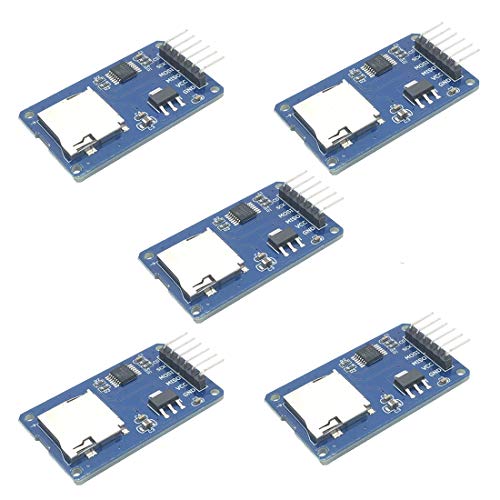
Compatible with Arduino UNO, R3, MEGA 2560 Due: The HiLetgo 5pcs Micro SD TF Card Adapter Reader Module works with these Arduino boards for easy data transfer.
What’s the Future of SCM With Nvme‑oF and Computational Storage?
SCM’s byte‑addressable tier, which already cuts latency by an order of magnitude compared with NAND flash, now intersects with NVMe‑oF’s low‑latency, network‑transparent fabric and computational storage’s in‑line data reduction, creating a stack where remote persistent memory can be accessed with sub‑microsecond round‑trip times while offloading filtering, compression, or encryption directly onto the storage node, thereby reducing host CPU cycles by up to 40 % and preserving the 5 GB/s snapshot throughput observed in virtual‑machine checkpointing; this convergence enables data‑center architectures that treat SCM as both a memory extension and a programmable compute layer, allowing workloads such as real‑time analytics and high‑frequency trading to maintain nanosecond‑scale query response without sacrificing crash‑consistent durability. I anticipate that NVMe oF orchestration will automate placement of SCM resources across racks, while computational storage offload will execute pre‑filter kernels at line rate, delivering sub‑microsecond latency for key‑value lookups and maintaining 99.999% availability in multi‑tenant clouds.
How to Integrate SCM Into Existing Server Architectures
When integrating storage‑class memory into existing server architectures, I first assess the memory controller compatibility, ensuring that the DDR‑compatible DIMM slots support the byte‑addressable load/store interface, which typically requires BIOS updates, firmware patches, and verification that the platform’s NUMA topology can expose persistent memory regions without disrupting DRAM allocation, while also confirming that the operating system’s NVDIMM driver stack, such as Linux’s libndctl and Windows Persistent Memory Platform, can map the SCM devices into the physical address space, thereby allowing applications to leverage the 10‑fold latency advantage over NAND flash and the 2‑to‑3‑times lower power consumption compared with traditional DDR SDRAM, all without exceeding the server’s thermal design power budget, which is usually limited to 150 W per memory channel. I then perform firmware integration, loading updated microcode to the controller, calibrating timing parameters, and testing error‑correction pathways, after which I implement thermal management by configuring fan curves, monitoring temperature sensors on each DIMM, and ensuring that sustained write workloads stay below the 85 °C threshold to preserve reliability and maintain the specified power envelope.
Common Pitfalls When Deploying Storage Class Memory
After verifying controller compatibility and firmware updates, the next step is to recognize that many deployments stumble on assumptions about persistence semantics, power‑loss protection, and NUMA placement, because overlooking these factors can cause data loss, unexpected latency spikes, or kernel panics, especially when applications treat SCM as ordinary DRAM without configuring persistent memory regions, while the operating system’s libndctl or Windows PMEM stack expects explicit namespace creation, correct alignment, and proper DAX mount options, which together guarantee that the 10‑fold speed advantage over NAND flash translates into reliable, byte‑addressable storage without compromising system stability. I also find that network bottlenecks quickly surface when distributed caches rely on SCM but lack sufficient bandwidth, while software compatibility issues arise if drivers or runtimes do not recognize the new namespace, leading to fallback to slower paths, increased CPU utilization, and fragmented I/O patterns that negate the intended performance gains.
Recommended Products
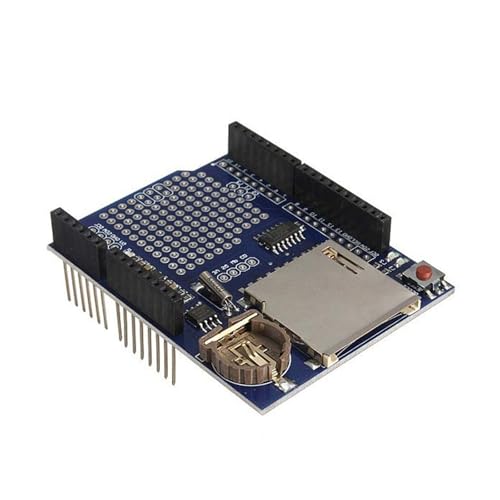
SD Card Compatibility: Supports FAT16/FAT32 cards with 3.3V level shifter circuit to prevent damage. Persistent Timekeeping: Integrated RTC maintains accurate...
Frequently Asked Questions
Will SCM Work With Existing Operating Systems Without Firmware Updates?
I think it can work with most OSes, but you’ll usually need driver updates for full OS compatibility; the firmware often stays the same, yet the OS still needs proper support.
Can SCM Be Used as a Primary Boot Device for Servers?
I tell you yes, SCM can serve as a primary boot device, provided the BIOS supports boot deviceability and the firmware offers BIOS supportability; otherwise you’ll need a firmware update or a compatible platform.
What Security Implications Arise From Scm’s Persistent Nature?
I’ve noticed how data remanence and access control suddenly matter: SCM’s persistence lets attackers retrieve stale data after power loss, so I enforce strict encryption and granular permissions to mitigate those risks.
Does SCM Support Wear‑Leveling Comparable to NAND Flash?
I can tell you that SCM does include wear‑leveling and endurance management, but its mechanisms differ from NAND flash; they’re built into the controller to spread writes and prolong cell life.
How Does SCM Affect Virtualization and VM Live‑Migration Performance?
I’ve found that SCM’s fast, byte‑addressable tier speeds up memory tiering, letting migration optimization copy state more quickly, so VM live‑migration experiences lower latency and fewer pauses.