As an Amazon Associate, we earn from qualifying purchases. Some links on this site are affiliate links at no extra cost to you. Our recommendations are based on thorough research and editorial judgment.

The Decline of microSD: Larger Cards Take Over

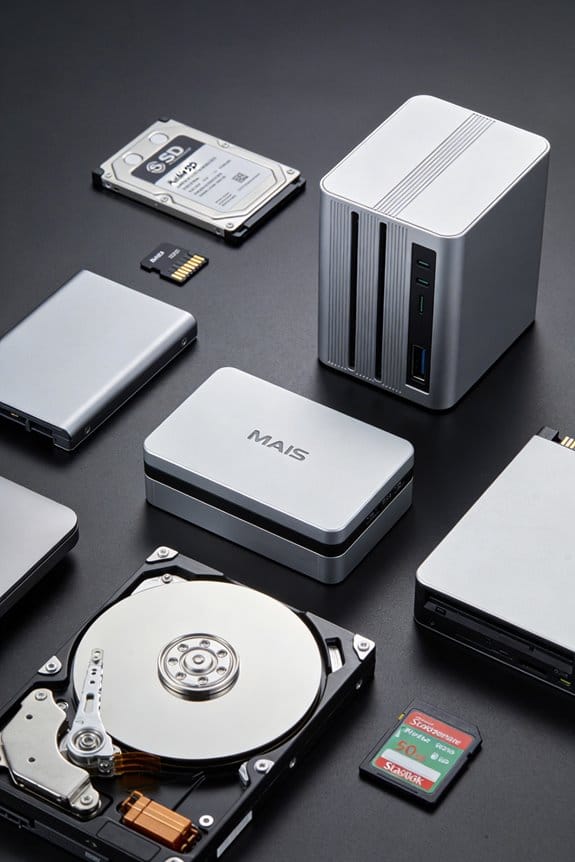
I see the 2026 microSD market, valued at $5.08 billion and comprising roughly 55 % of the SD‑memory‑card sector, is flattening with a 1.5 % CAGR through 2032, while flagship smartphones now ship 256 GB–1 TB UFS 3.1 internal storage, eliminating card slots, and external SSDs deliver 3 GB/s reads and >1 GB/s writes at $150–$200, making the legacy microSD form factor, limited to ~300 MB/s writes and priced $80–$120 for 512 GB+ units, increasingly obsolete despite niche industrial demand for A‑class UHS‑II U3 cards rated –40 °C to 85 °C; further details await if you continue.
Key Takeaways
- Consumer devices now favor internal UFS 3.1 storage (256 GB–1 TB), eliminating microSD slots and reducing removable‑media demand.
- External SSDs and cloud storage provide superior speed (≥3 GB/s) and cost‑effectiveness, outpacing high‑end microSD performance (~300 MB/s).
- NAND shortages and price spikes (e.g., 1 TB TLC chips from $4.80 to $10.70) make larger SSDs and cloud alternatives more attractive.
- Industrial and niche markets retain microSD usage, but they represent only ~55 % of the overall SD segment, limiting growth.
- Market forecasts show microSD CAGR flattening at 1.5 % through 2032, while broader SD cards grow at 3.9 % due to larger‑capacity alternatives.
MicroSD Card Market Snapshot: Size, Share, and Growth Outlook
You may be interested
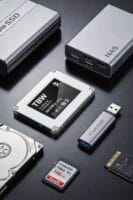
The microSD card market in 2026 is valued at roughly 5.08 billion USD, representing about 55 % of the total SD‑memory‑card market, while its unit‑shipment share ranges between 55 % and 70 %, and the segment accounts for 79 % of overall SD/memory‑card market share in recent data, indicating a dominant position despite modest growth. I note that retail packaging trends emphasize compact, recyclable designs, which reduce logistics costs and align with sustainability targets, while brand consolidation among major manufacturers streamlines product lines, improves supply chain efficiency, and stabilizes pricing structures across the market. Projections show a 1.5 % CAGR through 2032, with unit volumes modestly increasing, yet price pressure persists due to NAND flash constraints and shifting consumer preferences toward internal storage solutions.
How Smartphone Design Trends Are Squeezing MicroSD Demand
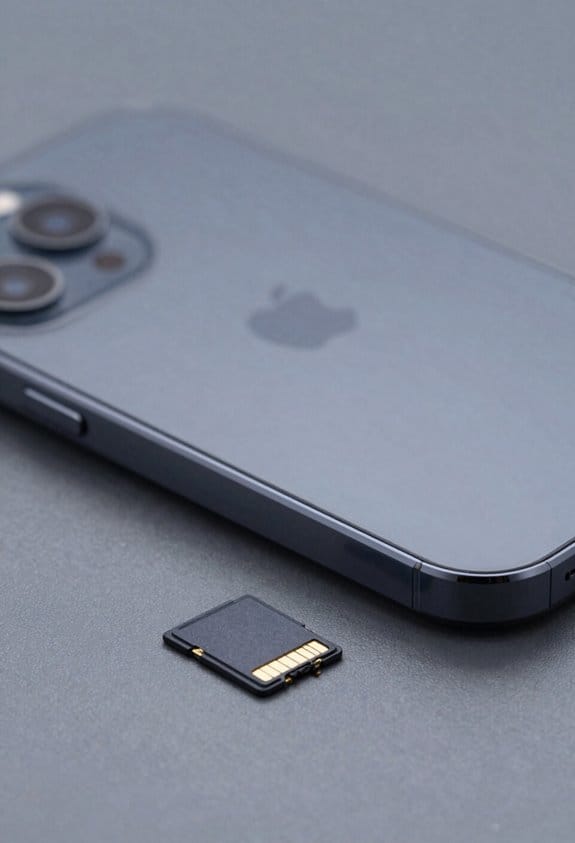
Because flagship smartphones increasingly integrate 256 GB‑to‑1 TB UFS 3.1 internal storage, manufacturers are eliminating microSD slots to streamline chassis design, reduce component count, and meet thin‑profile aesthetic goals, thereby decreasing the physical space allocated for removable media and limiting consumer options for expandable storage. I note that camera integration now demands larger sensor modules, which occupy the space previously reserved for card readers, and that the shift toward modular phones, which rely on internal‑memory‑only architectures, further marginalizes removable media. The trend results in a measurable decline in microSD demand, as internal flash capacities surpass 512 GB, offering sequential read speeds exceeding 2 GB/s, while external card performance lags at 300 MB/s, reinforcing design choices that favor internal storage.
Why Niche and Industrial Applications Still Rely on MicroSD Cards
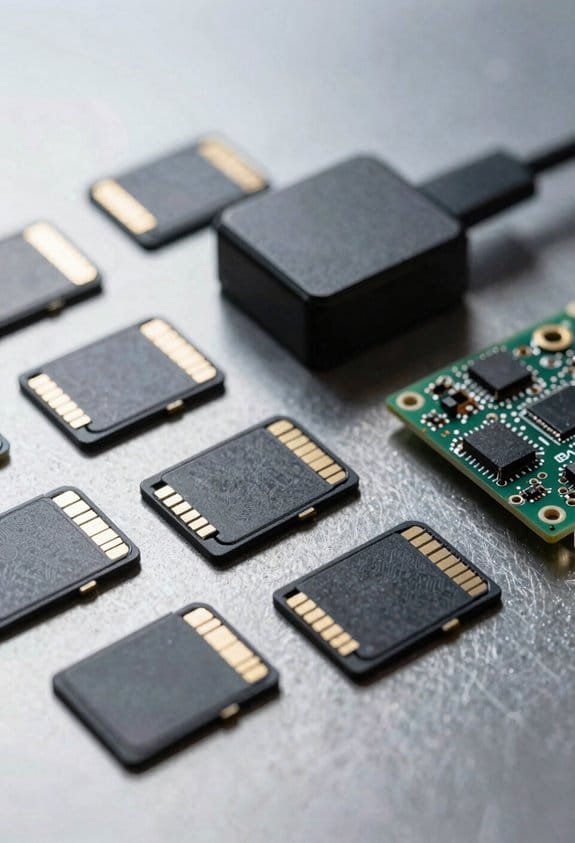
Industrial‑grade microSD cards, featuring A‑class UHS‑II U3 ratings, 3 GB/s sequential read speeds, 300 MB/s write rates, and temperature ranges from –40 °C to 85 °C, remain indispensable in embedded systems where form‑factor constraints, power‑efficiency requirements, and deterministic latency outweigh the benefits of larger internal NAND modules, while manufacturers prioritize ruggedized packaging, error‑correction code (ECC) support, and compliance with IEC 62368‑1 standards for medical and automotive applications, which together sustain a market share of approximately 55 % in the overall SD segment despite declining consumer demand. I find that industrial sensors, which often operate in confined enclosures, rely on the compact footprint and low power draw of microSD to log high‑frequency data, while legacy equipment, designed for older interfaces, cannot accommodate newer, bulkier storage solutions without extensive redesign, therefore preserving the niche demand for these cards in specialized markets.
How Cloud Storage and External SSDs Are Overtaking MicroSD Cards
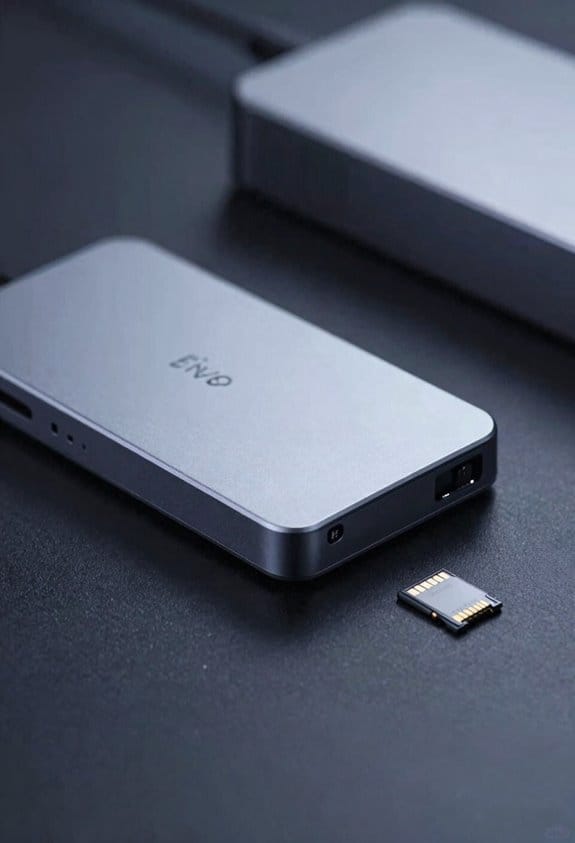
I’ve observed that cloud storage adoption has risen steadily, with global usage increasing 25% year‑over‑year, while external SSDs now dominate portable high‑performance storage, offering sequential read speeds of 3 GB/s and write rates exceeding 1 GB/s, which surpass the 300 MB/s write capability of typical high‑end microSD cards, thereby reducing reliance on physical media for data‑intensive applications; consequently, manufacturers are integrating 1 TB‑class NVMe SSDs into laptops and tablets, providing up to 2 TB of onboard capacity at $150–$200 per unit, whereas microSD pricing for 512 GB and larger formats has surged to $80–$120 due to NAND shortages, and cloud services such as Amazon S3 and Google Drive now deliver virtually unlimited storage with latency measured in milliseconds, supporting real‑time synchronization across devices, which further erodes the market share of microSD cards in both consumer and professional environments. This shift enables edge computing nodes to stream data directly to hybrid backups, reducing local write cycles, while SSDs supply tier‑1 performance for analytics, and cloud APIs provide scalable, geo‑redundant archives, together forming a resilient, low‑latency storage hierarchy that marginalizes microSD reliance.
How NAND Shortages and Price Spikes Impact MicroSD Card Availability
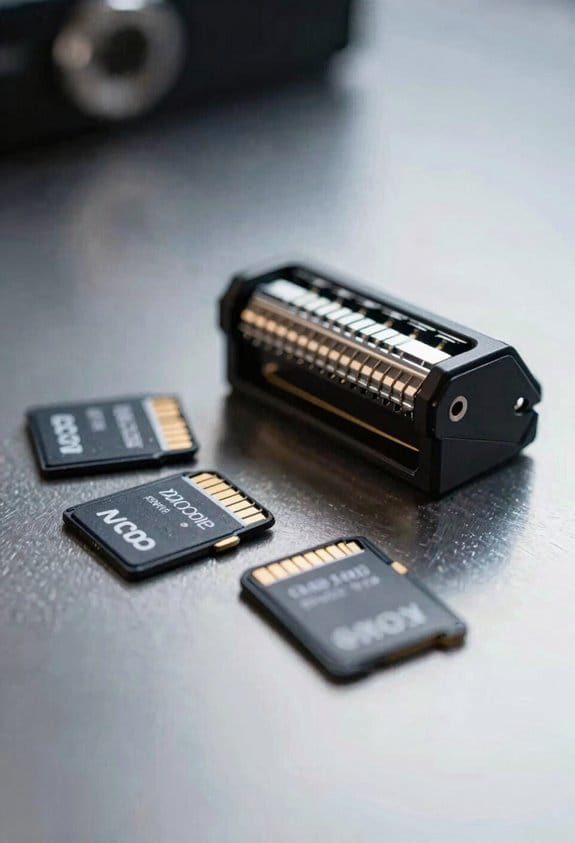
When NAND flash supplies tighten, manufacturers shift production capacity from consumer microSD cards to higher‑margin enterprise devices, resulting in reduced output of 128 GB‑512 GB modules, while price indices for 512 GB and larger capacities climb from $80 to $120 per unit, reflecting a 50 % contract price increase announced by SanDisk in November 2026 and a doubling of 1 TB TLC chip costs from $4.80 to $10.70 within six months, which together force inventory shortages, extend lead times beyond three months, and push OEMs to prioritize internal storage upgrades over external card integration. I note that supply chain resilience now hinges on strategic commodity hedging, as firms secure forward contracts for NAND wafers to mitigate volatility. Consequently, price spikes propagate through the distribution network, inflating end‑user costs for 256 GB and 512 GB cards, while manufacturers reallocate capacity to SSD and server memory, further constricting microSD availability and reinforcing a market shift toward larger internal storage solutions.
Regional Dynamics: Asia‑Pacific Dominance Versus North America’s Shift
The recent NAND shortage, which forced manufacturers to reallocate capacity from consumer microSD modules to enterprise SSDs, has amplified regional disparities, so the Asia‑Pacific region—accounting for roughly 45‑48 % of global shipments and concentrating production in Taiwan, Japan and China—continues to dominate the market, while North America, representing about 30 % of demand, is shifting focus toward internal storage upgrades and alternative solutions such as external SSDs and cloud services, a trend reflected in the declining proportion of microSD orders from OEMs in the United States and Canada, the increasing adoption of 256 GB‑512 GB internal flash in smartphones, and the rising reliance on 1 TB‑class external drives for high‑capacity needs, all of which are supported by the latest market data showing a 1.5 % CAGR for microSD volumes through 2032 versus a 3.9 % CAGR for the broader SD memory card market. I note that manufacturing hubs in Taiwan and Japan benefit from stable trade policies that preserve export volumes, whereas North American firms encounter tariff adjustments that incentivize domestic SSD production, prompting further migration away from microSD form factors.
What the Next Decade Holds for MicroSD Cards and Larger Storage Formats
I’m seeing the microSD market flattening as internal NAND density climbs, while external SSDs and cloud tiers accelerate, because the 1.5 % CAGR projected for microSD volumes through 2032 contrasts sharply with the 3.9 % CAGR for the broader SD memory card market, which reflects a shift toward higher‑capacity, lower‑latency solutions such as 512 GB‑2 TB NVMe‑based modules, 4 TB‑8 TB SATA SSDs, and multi‑petabyte cloud storage platforms that deliver sub‑millisecond access times, reduced power draw, and built‑in redundancy, all of which are increasingly favored in smartphones, laptops, and embedded systems where form factor constraints are mitigated by integrated storage controllers and firmware‑level encryption. I anticipate modular storage architectures will dominate, leveraging standardized interfaces that meet evolving regulatory standards, while larger formats will expand capacity per unit, reduce per‑gigabyte cost, and improve thermal efficiency, thereby reshaping supply chains and prompting OEMs to prioritize high‑throughput, low‑latency designs over legacy microSD form factors.
Frequently Asked Questions
Will microSD Cards Become Obsolete by 2030?
I don’t think microSDs will be completely obsolete by 2030; their physical durability still matters for niche devices, though market consolidation toward larger internal storage and cloud solutions is rapidly eroding mainstream demand.
Can Larger SD Cards Replace microSD in Smartphones?
I think larger SD cards could replace microSD in smartphones, but physical connectors and user ergonomics matter—bulky slots may clash with sleek designs, and handling a bigger card feels clumsy compared to a tiny, slip‑in microSD.
What Are the Environmental Impacts of Increased SD Card Production?
I’m concerned that ramping up SD card production intensifies material sourcing pressures and boosts e‑waste, so I urge you to prioritize responsible e‑waste recycling to mitigate those environmental impacts.
How Do Warranty and Data Integrity Differ Between microSD and Larger Cards?
I tell you microSDs usually get shorter warranty coverage, while larger cards often offer longer periods and more thorough data verification; I’ve noticed the bigger formats tend to include robust error‑checking tools.
Are There Emerging Standards That Could Revive microSD Demand?
Like a phoenix rising, I think UFS Expansion and Removable UFS could reignite microSD demand, offering faster speeds and modular flexibility that appeal to smartphones, drones, and industrial IoT devices.